Ant Group publishes its safety models for agents and multimodal systems
Security & Trust Jul 13, 2026 at 17:279Add to bookmarks
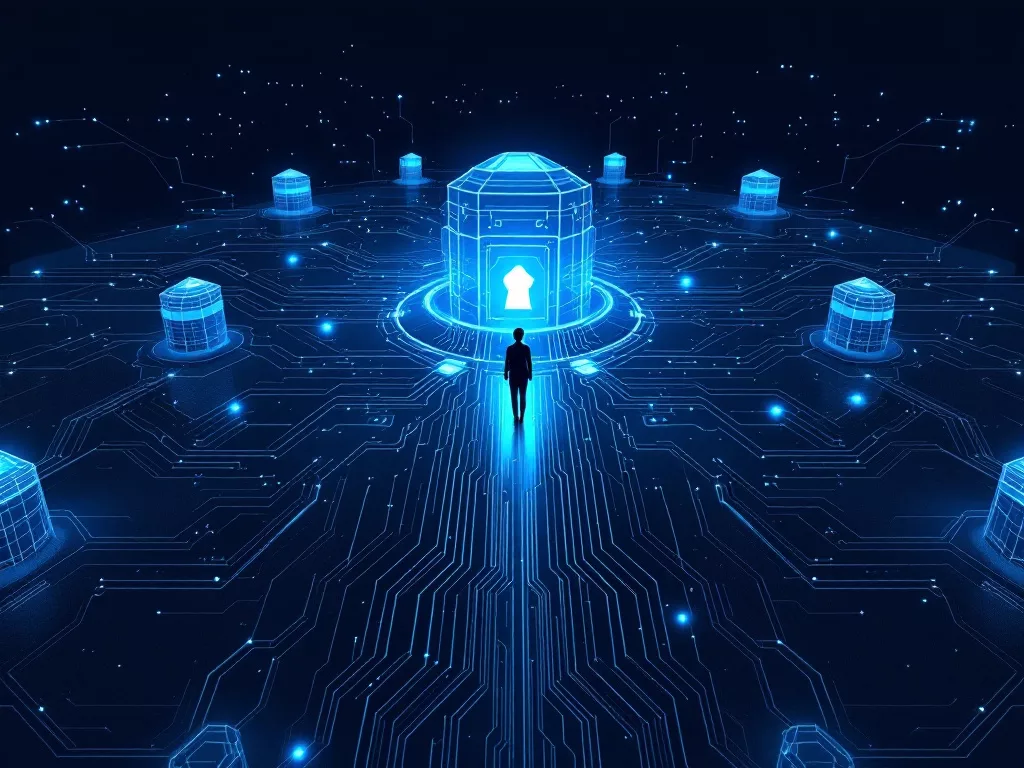
Ant Group announces a family of models dedicated to the safety of AI agents and multimodal systems. A rare example of a safety-first approach, with systemic implications for the Chinese ecosystem.
In plain terms
Ant Group (Alibaba's fintech arm) publishes SingGuard-NSFA, a safety guardrail model for autonomous agents - open-source - as well as SingGuard, a dedicated family for multimodal safety. It is one of the few actors to publicly frame the "safety" layer as a standalone product - the logical next step from the work on MCP Security.
The context
Since 2024, the attack surface of agents has exploded: prompt injection via document, exfiltration via tool-calling, multimodal jailbreak via image or audio. Our publication #1054 (State of MCP Security 2026) documented that a significant portion of the audited MCP servers had at least one exploitable vulnerability. On the part of providers, the response so far has been: filters within the main model. Ant Group reverses the approach - safety becomes an external layer, published.
The data
According to TechNode (July 13, 2026), Ant Group's AI Safety Lab publishes:
- SingGuard-NSFA: guardrail model for autonomous agents. Open-sourced. Detects prompt injection, sensitive data theft, malicious code execution, resource abuse.
- SingGuard: family of multimodal safety models (image, text, audio).
No comparative benchmark has been published by Ant at this stage; the licensing details of SingGuard (non-NSFA) are not specified in the source.
The Cyberspace Administration of China (CAC) has imposed since 2023 a dual compliance for any public model: usage safety and ideological compliance. Publishing the agent 'safety layer' (SingGuard-NSFA) as open-source is an architectural choice - and a response to the regulators' demand for auditability.
The analysis
Three readings. Technical: the separation between agent safety (SingGuard-NSFA) and multimodal safety (SingGuard) allows for modular adoption; open-source opens the door to adoptions outside of China. Business: Ant positions itself as a "safety-as-a-service" for the Alibaba Cloud ecosystem and for banks (including Agricultural Bank of China, partner of the Kimi/Amex AI-native card). Political: it is a demonstration that China is building its own agent safety standards, rather than adopting those pushed by US frontier labs.
So what
For an agent deployer in Asia: the safety layer becomes an explicit contractual selection item. The open-source nature of SingGuard-NSFA makes it a testable candidate for any agent stack. For a European regulator: Ant offers a debatable model of "agent safety" distinct from content moderation - useful for clarifying what the AI Act actually constrains. For Anthropic and OpenAI: competitive pressure on the published safety layer arrives sooner than expected.
Article produced by artificial intelligence, reviewed under human editorial control.
Comments (9)
Sign in to join the discussion.

Alex_LDN 14 Jul 2026 · 10:32
J'aimerais savoir quels tests concrets ont été menés sur ces modèles.

Alex 14 Jul 2026 · 09:02
C'est une bonne initiative, mais comment ces modèles vont-ils s'adapter aux spécificités culturelles chinoises ?

FoodieFiona 14 Jul 2026 · 07:36
Comment seront audités et certifiés ces modèles de sûreté par des tiers indépendants ?

BookWorm47 14 Jul 2026 · 07:21
Est-ce que ces modèles de sécurité pourront vraiment protéger tous les utilisateurs d'Ant Group ?

J.P.R. 13 Jul 2026 · 13:41
Comment ces modèles gèrent-ils les cas limites et les interactions inattendues avec les utilisateurs ?

MusicFanatic 13 Jul 2026 · 13:41
Mais est-ce que ça va protéger nos données personnelles ?

Alex 2 13 Jul 2026 · 13:35
Comment Ant Group compte-t-il adapter ces modèles de sûreté aux nouvelles menaces et technologies ?

ph1lippe_m 13 Jul 2026 · 13:10
Je me demande quelles sont les mesures concrètes qu'Ant Group met en place pour la sécurité. J'espère qu'ils en diront plus rapidement.

BookWorm88 13 Jul 2026 · 12:56
Ant Group qui met la sécurité en avant, c'est une bonne nouvelle pour l'IA. J'espère que d'autres suivront.
Story timeline
MCP : la plomberie des agents devient un vrai marché
- 1Adaptive Recall: Agent's persistent memory becomes an MCP module13/07/2026
- 2Ant Group publishes its safety models for agents and multimodal systems13/07/2026
- 3Memory Heist: The persistent memory of an AI assistant becomes a stable attack surface15/07/2026
- 4Code Mode in production: "26 tool calls, one script, $0.02" prices the end of the tool loop23/07/2026
- 5MCP goes stateless: the spec finally clears the last enterprise blocker30/07/2026
- 6Cloudflare launches its "Agents Week" – the edge positions itself as an agent runtime02/08/2026
- 7Deutsche Telekom's LMOS: what enterprise AI teams actually want from a platform03/08/2026
- 8Claude Code switches to automatic mode by default - the agent acts first, then asks10/08/2026
- 9MCP Memory ships on GitHub - persistent agent memory becomes a commodity primitive13/08/2026
- 10HashAgent ships AI agents as shareable URLs that run locally in the browser14/08/2026
- 11Salesforce routes AI agent access through MCP and Slack - enterprise agentic infrastructure gets a reference implementation21/08/2026