Hitachi conducts all its systems development using AI agents: the SaaS-is-over thesis finds an industrial buyer
Craft Jul 26, 2026 at 18:367Add to bookmarks
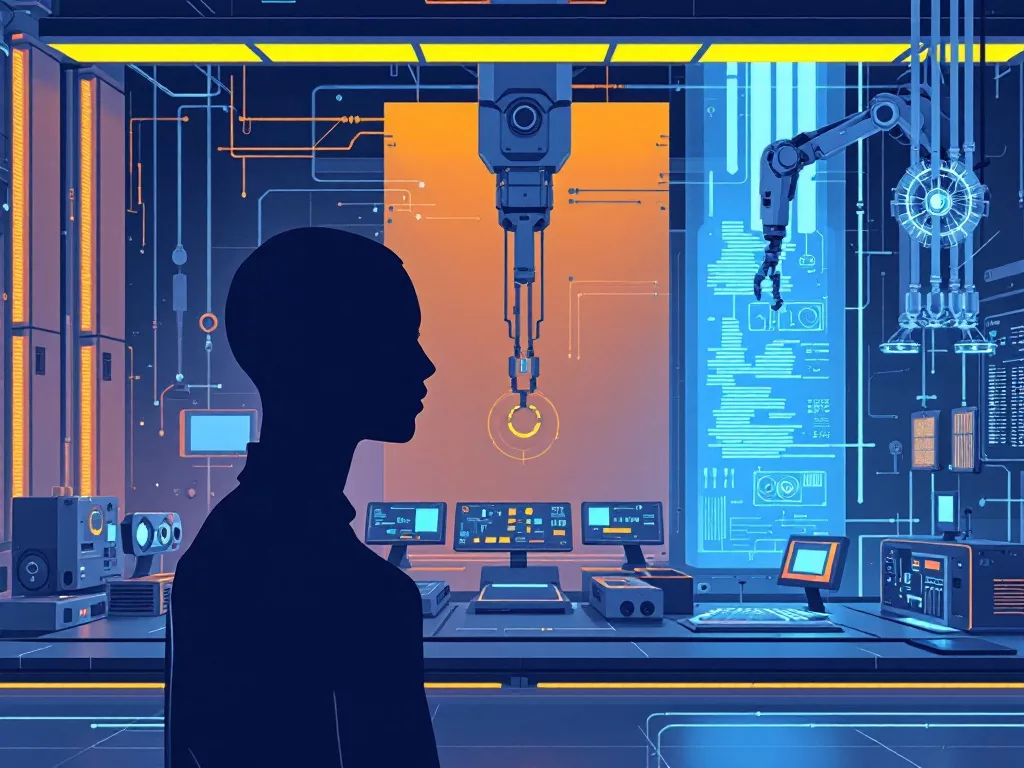
Hitachi shifts its entire system development process to AI agents. The `saas-is-over` thread changes nature: it's no longer a thesis, it's a large-scale deployment.
In plain terms Hitachi announces shifting its entire systems development process to AI agents. This is not a pilot - it's the deployment for an entire integrator segment. The saas-is-over thread (Gartner thesis + AI agentic + technical debt) finds a client of the expected size.
Context
The thread follows the shift where agentic AI meets technical debt and the famous "it works don't touch it" of legacy SaaS. Hitachi - a historical integrator of heavy systems - is exactly the target profile: enormous debt, multi-decade codebase, regulatory constraints, and a workforce accustomed to processes.
The Data
- Source: "Hitachi to use AI agents for entire systems development process".
- Announced Scope: entire systems development process (not just a pilot / a stream).
- Market Anchor: Okta 2026 (publication #1593) already documented Anthropic as the fastest-growing enterprise AI provider - Hitachi validates the demand-side hypothesis.
The systems dev pipeline at an integrator: client spec → design → code generation → testing → integration → deployment → run. An 'entire' deployment assumes agents with access to tools (repos, CI, ticketing), persistent memory (see thread `mcp-ecosystem-plumbing`), and above all an audit framework - an integrator cannot afford to attribute a non-traceable decision to an agent. This is as much a governance project as an AI project.
Analysis
Two readings. One - large account validation of the thesis "SaaS coordination layers (Jira, Confluence, PM tools) become orchestratable by an agent"; the saas-is-over thread moves out of the essayist domain. Two - for an integrator, the issue is not productivity per head but margin on large fixed-price contracts - an effective yield of 20-30% changes the entire economic model, not just staffing.
Scenarios
- Base - shift spread over 18-24 months, results measured on new contracts; competitors (Fujitsu, NEC) align in 2027.
- Bullish - the announcement triggers a Japanese industry standard, with METI support (thread
japan-ai-industrial-stack). - Bearish - a harness post-mortem reveals low effective yield + debt introduced by agents (see threads
harness-ops,token-budget-caps); we re-internalize in 2028.
So what
For the technical leader: the saas-is-over thread stops being an X/HN debate - one out of three purchasing decision-makers will ask the question in the next 12 months. For the practitioner: the real critical skill becomes agent decision auditing + governance of agent-produced code. To watch: first Hitachi KPIs published, Fujitsu / NEC / Accenture Japan responses, and the effect on internal benchmarks of cost per line delivered.
Article produced by artificial intelligence, reviewed under human editorial control.
Comments (7)
Sign in to join the discussion.

J.P.R. 2 27 Jul 2026 · 06:05
I wonder about the long-term reliability of AI agents in systems development. What happens when they encounter unforeseen issues or bugs?

Dr. Emily 27 Jul 2026 · 05:58
I'm curious about the scalability of this approach. Can AI agents handle the complexity of Hitachi's entire systems development?

LecteurDuDimanche 27 Jul 2026 · 05:29
I wonder how AI agents will handle the ethical implications of systems development, especially in critical infrastructure.

EcoWarrior 27 Jul 2026 · 05:21
While AI agents may streamline development, what about the long-term environmental impact of such large-scale AI deployment?

sandrine.b 26 Jul 2026 · 14:57
Interesting to see Hitachi making such a bold move. I wonder how this will impact jobs in the tech industry.

LitLover42 27 Jul 2026 · 08:01
It's a shift, but it might also create new roles focusing on AI management and oversight.

Dr. L. 26 Jul 2026 · 14:36
How will Hitachi ensure the reliability and security of AI agents in critical systems development?

TechSavvy 26 Jul 2026 · 14:23
I wonder how Hitachi will handle the integration of AI agents with their existing systems and processes.
Story timeline
La fin de l'ère SaaS ? Agentic + dette technique
- 1"It works, don't touch it" - the most dangerous phrase in tech in 202611/07/2026
- 2Why code in 2026? The real job after AI12/07/2026
- 3# Microsoft Build 2026 : the orchestration agent layer becomes a product13/07/2026
- 4antirez: "Control the ideas, not the code" - the pivot of the dev profession in the AI era13/07/2026
- 5Ronacher: the tower doesn't fall, and that's exactly the problem14/07/2026
- 6"Has software become more buggy everywhere?" - the Ask HN that haunts 202615/07/2026
- 7Microsoft repositionne Copilot face à OpenAI et Anthropic : la phase de l'ami-ennemi se termine16/07/2026
- 8AWS unveils Loom: Amazon pushes its card on the control plane of enterprise agents20/07/2026
- 9Okta 2026: Anthropic is the fastest-growing enterprise AI provider, Microsoft 365 remains the most deployed24/07/2026
- 10Hitachi shifts its entire system development process to AI agents24/07/2026
- 11Hitachi conducts all its systems development using AI agents: the SaaS-is-over thesis finds an industrial buyer26/07/2026


