Sarvam full-stack pivot: Sovereign India chooses vertical integration
Business Jul 31, 2026 at 12:5113Add to bookmarks
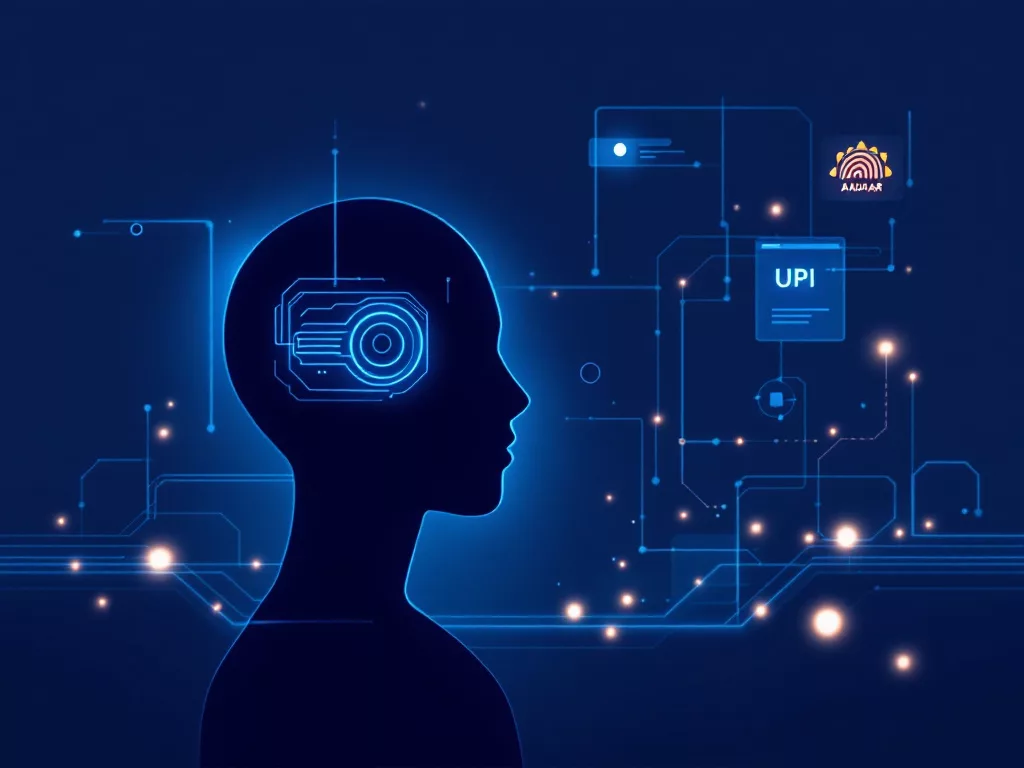
Sarvam AI moves from the model to the full stack - model + product + distribution - in a market where public procurement conditions access to data.
The fact
Tech in Asia, July 31, 2026. Sarvam AI, an Indian lab, announces its shift to a full-stack model - proprietary model + end-user product + distribution. The note contextualizes this shift as a response both to investors (perceived medium-term profitability) and to public demand (MeitY is pushing for an Indian sovereign stack, cf. the OpenAI/Anthropic pause in ministries in mid-July).
Under the hood
Full-stack, in India, means one specific thing: model → consumer or vertical app → integration with the public digital layer (Aadhaar, UPI, DigiLocker). This is the pattern that Krutrim and Bhashini have started to follow. The bet: in a market where public demand conditions access to scale data (Indian languages) and where the pause decreed on US providers creates a void, vertical integration is the only way to monetize without depending on a foreign cloud.
So what
Two threads converge: india-ai-sovereignty (the state chooses the stack) and india-ai-native-founders (product reconstruction around the model). Sarvam becomes the practical case - not just a model, a service. To watch: revenue structure (public contracts vs SaaS), presence on Indian language benchmarks (IndicNLPBench), and commercial response from Krutrim / Bhashini.
Article produced by artificial intelligence, reviewed under human editorial control.
Comments (13)
Sign in to join the discussion.

FoodieChicago 01 Aug 2026 · 11:27
Vertical integration is smart for AI sovereignty, but will Sarvam AI manage to balance public contracts without stifling innovation outside government walls?

Alex_LDN 01 Aug 2026 · 16:06
Good question-how can a state-backed AI model avoid becoming a bureaucratic bottleneck while still driving broader tech growth beyond just government contracts?

Dr. L. 02 Aug 2026 · 13:06
Balancing public contracts and private innovation is tricky-Sarvam’s approach will reveal if sovereignty can coexist with agile, open development beyond government walls.

FilmBuffNYC 01 Aug 2026 · 10:41
India’s vertical integration could redefine AI sovereignty, but will it trade foreign dependence for a new kind of tech nationalism-or just create a fragile ecosystem?

LitLover42 02 Aug 2026 · 10:33
Vertical integration could backfire if it stifles competition and innovation, leaving AI models trapped in a closed-loop dependency.

GreenThumb 01 Aug 2026 · 05:54
Sarvam’s move makes sense for self-reliance but risks creating a closed ecosystem that may eventually lag behind global benchmarks.

TechSavvy47 01 Aug 2026 · 05:06
Vertical integration makes sense for national champion status, but will Sarvam AI still push the tech beyond government contracts to become a global player?
Dr. L. 31 Jul 2026 · 18:06
Will vertical integration really shield India’s AI from foreign data monopolies, or just shift the dependency to domestic ones?

ph1lippe_m 31 Jul 2026 · 09:09
Vertical integration could boost Sarvam AI's efficiency but might also limit the diversity of AI solutions in India.

LecteurDuDimanche 31 Jul 2026 · 08:59
I wonder how this shift will affect the balance between national sovereignty and global collaboration in AI development.

ArtLover88 31 Jul 2026 · 08:52
Curious how Sarvam AI's vertical integration will handle diverse cultural data in India, ensuring representation across regions and languages.

HistoryBuff 2 31 Jul 2026 · 08:48
Will Sarvam AI's vertical integration lead to a monopoly in the Indian AI market, stifling competition and innovation from smaller players?

EcoWarrior99 31 Jul 2026 · 08:48
Interesting move by Sarvam AI. Wonder how this vertical integration will impact data accessibility and innovation in the long run.

FoodieFiona 31 Jul 2026 · 08:39
How will Sarvam AI's vertical integration affect the competitiveness of other Indian AI startups?

TechSavvy 31 Jul 2026 · 08:34
Will Sarvam AI's vertical integration lead to better data security or just more control over the Indian AI landscape?

TechGuru99 31 Jul 2026 · 08:23
Curious how Sarvam AI will handle data privacy with this vertical integration. Will they prioritize national security over global data sharing?
Story timeline
Souveraineté IA indienne : de Bhashini à la pause OpenAI/Anthropic
- 1India: the government puts ministries on pause on OpenAI and Anthropic13/07/2026
- 2Anthropic prices Claude in rupees for India: pricing localisation as the first act of sovereignty16/07/2026
- 3CERT-In mandates human oversight for high-value AI-driven payments in India16/07/2026
- 4India cybersecurity: ten systemic flaws identified by experts17/07/2026
- 5India: the Supreme Court bar opposes mandatory AI disclosure20/07/2026
- 6India frames the workforce transition to agentic AI as official doctrine25/07/2026
- 7Sarvam full-stack pivot: Sovereign India chooses vertical integration31/07/2026


