Moratorium on AI Data Centers: Ocasio-Cortez and Sanders Challenge U.S. Compute Expansion
AI & EnergySubscribers only Jun 25, 2026 at 16:298Add to bookmarks
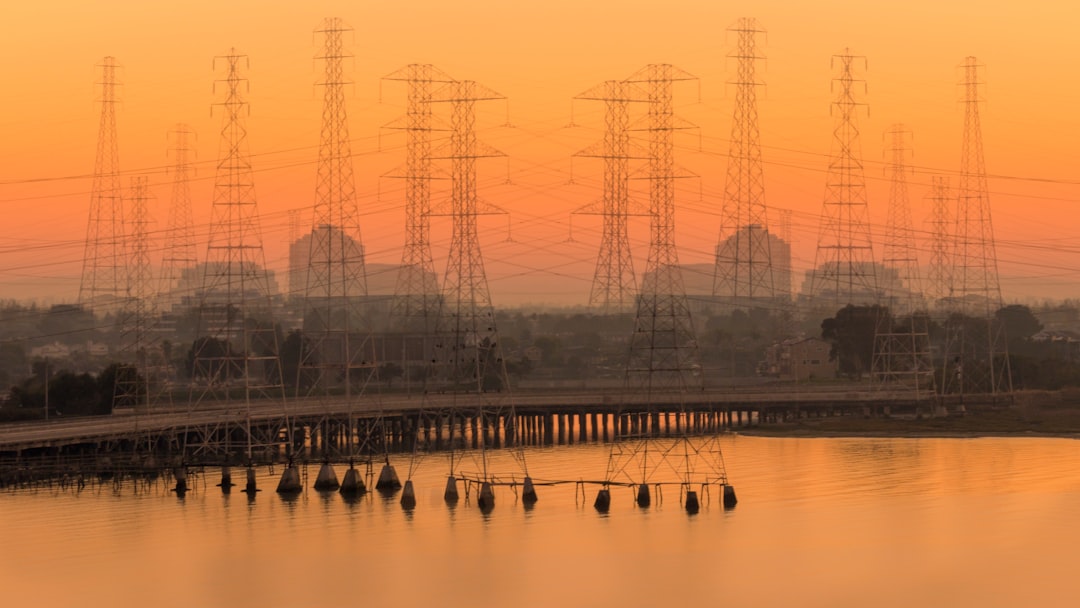
The first federal bill directly targeting AI data centers injects a regulatory risk premium into a sector weighing $600 billion in announced CAPEX by 2027.
Context
On June 25, 2026, Alexandria Ocasio-Cortez and Bernie Sanders introduced the AI Data Center Moratorium Act, aiming to freeze all new permits for AI-dedicated data center construction in the United States. This marks the first federal legislative initiative directly targeting the physical and energy footprint of artificial intelligence. Global data center consumption is expected to reach 945 TWh in 2026 according to the IEA (Electricity 2025)—with the United States accounting for nearly 40%, or ~380 TWh, a more than 100% increase since 2020.
Data
- U.S. data center electricity demand reached 176 TWh in 2023 (DOE, 2024).
- The seven largest hyperscalers (Microsoft, Google, Amazon, Meta, Apple, Oracle, xAI) have announced $600+ billion in cumulative data center CAPEX for 2025-2027.
- CoreWeave signed a $355 million storage deal with Backblaze (06/24); Argentum AI raised $4.1 billion for 27,000 GB300 GPUs.
- The share of nuclear in hyperscalers' PPAs has doubled in 18 months: 23% of new agreements (Wood Mackenzie, Q1 2026).
Analysis
The mechanism is a classic input/output bottleneck: AI compute demand is growing exponentially (+300% in 3 years for H100/B200 GPUs), but the electrical grid infrastructure is not keeping pace. PJM Interconnection (U.S. East Coast grid) has a backlog of 290 GW with delays of 7 to 12 years. A moratorium—even symbolic—injects regulatory risk premiums into CAPEX projections and compute players' valuations.
Probabilistic Scenarios
- Scenario A - Legislative Rejection (65%): Republican Congress blocks. Pressure from states (California, New York) intensifies within 18 months.
- Scenario B - Partial Adoption (25%): Energy criteria (renewable share ≥ 60%) imposed for federal permits. Advantage for operators committed to green PPAs (Google, Microsoft).
- Scenario C - EPA Precursor Effect (10%): EPA regulations on data center emissions → CAPEX shock for CoreWeave, Equinix, and Digital Realty.
Portfolio Implications
Data center REITs (Equinix EQIX, Digital Realty DLR) face short-term regulatory risk discounts. Nuclear providers (Constellation Energy CEG, Vistra VST) gain a structural competitive advantage. Pure-play GPU cloud providers with weak balance sheets (CoreWeave) remain most exposed to any permitting constraints.
Risks & Blind Spots
Backed by progressive senators in a dominant deregulatory context, the bill has little chance of passing in the short term. However, it sets a political precedent that could accelerate state-level measures within 12-18 months. Utilities (Constellation, NextEra), which view data centers as a welcome captive demand, will actively oppose it.
To Monitor
- DOE and FERC response within 30 days of filing.
- Three Mile Island Unit 1 nuclear permit (Microsoft PPA, operational since Q1 2026).
- PJM backlog reform (Q3 2026).
- Positions of senators from states with heavy data center presence (Virginia, Texas, Ohio).
Content reserved for members
Create a free account to access all our content and the weekly review.
Article produced by artificial intelligence, reviewed under human editorial control.

Comments (8)
Sign in to join the discussion.

J.P.R. 25 Jun 2026 · 21:00
600 Md$ en CAPEX et déjà un risque réglementaire : les fondamentaux de la gestion de risque, messieurs, on en parle ?

kenji_osaka 25 Jun 2026 · 20:58
規制リスクが顕在化か。テック株のボラティリティはさらに上がりそうだが、長期投資家は無視できる範囲だろう

Cla1re 25 Jun 2026 · 20:58
Enfin une régulation qui questionne l’impact écologique des data centers IA ! Espérons que ça pousse vers des modèles plus verts.

Econo_Hans 25 Jun 2026 · 20:52
Eindelijk iemand die de stroomverslindende hype van Big Tech aanpakt. Maar laten we hopen dat het niet bij symboliek blijft.

the_contrarian 25 Jun 2026 · 20:42
Finally, someone asking who foots the bill for these power-guzzling server farms while VCs cash out.

EconEddie_89 25 Jun 2026 · 14:44
600B CAPEX on vaporware compute while NYC public housing crumbles-priorities, as always, are impeccable.

EconEddie_89 25 Jun 2026 · 14:43
Regulatory risk was always the wildcard-now the market’s forced to price it in. 2024 just got its first real stress test for AI capex.

L. from Leeds 25 Jun 2026 · 14:38
Regulation now or regret later-second-order effects of unchecked compute growth aren’t just carbon footprints, they’re geopolitical landmines.
Story timeline
Regulation of AI Data Centers: Legislative Risk and Energy Constraints
- 1Moratorium on AI Data Centers: Ocasio-Cortez and Sanders Challenge U.S. Compute Expansion25/06/2026
- 2OpenAI Limits GPT-5.6 at Government Request: First Instance of State Control Over an LLM26/06/2026
- 3GE Vernova and the AI Electricity Challenge: Between Gas Turbines and Blackout Risks27/06/2026
- 4Blackout on the Horizon: American Utility CEO Sounds Alarm on Electricity Supply Deficit28/06/2026
- 5# AI & Energy: $200B in M&A in the U.S. Electric Sector - Hyperscalers Secure Their Power Supply [ENCADRE titre="Key Takeaways"] [ENCADRE contenu=" - **$200 billion** in mergers and acquisitions in the U.S. electric sector driven by AI energy demands. - **Hyperscalers** (Google, Amazon, Microsoft, Meta) invest heavily to secure their power supply. - Renewable energy and grid modernization become critical priorities. "] [/ENCADRE]29/06/2026
- 6BIS: AI Spending Boom Threatens Global Financial Stability29/06/2026
- 7Lawsuit Against Eagan (Minnesota) Data Center Moratorium: The Legal Front of the AI Battle Opens29/06/2026
- 8Digital Realty acquires Blackstone's data centers in Virginia for $3.5 billion: the major consolidation of AI real estate30/06/2026
- 9Realta Fusion generates electricity directly through nuclear fusion: a world first that reshapes the energy timeline.30/06/2026
- 10Starwood Invests $10 Billion in Real Estate in the AI Era: PE and REITs Accelerate the Pivot02/07/2026