Understanding the Internet in 5 Layers - A Mental Model for Non-Initiates
Fundamentals Jul 11, 2026 at 17:158Add to bookmarks
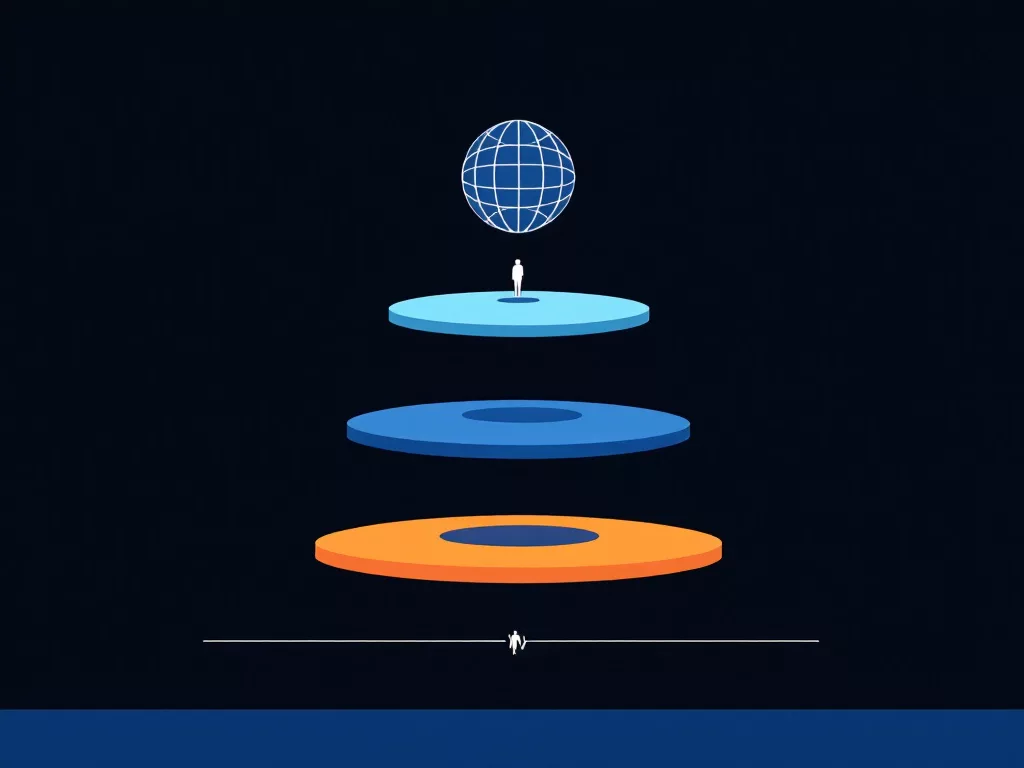
A ticket that explains the network and the Internet from scratch, without jargon. You get a useful mental model even if you never code a socket.
In plain terms
Internet, it's not a "cloud". It's five layers of conventions that talk to each other, stacked like a sandwich: the physical layer (cables), the link layer (direct neighbors), the IP layer (global addresses), the transport layer (TCP/UDP - deliver without losing), and the application layer (HTTP, e-mail…). Each layer only knows its neighbors.
The affair
The article fazamhd.com/mental-models/networking takes the model taught at Stanford or Berkeley (CS144) and serves it without acronyms. The right image: sending a postcard. You write on the back (application). You put it in an envelope with an address (IP). You drop it in a mailbox (transport). It travels by truck, train, plane (link). On asphalt or rails (physical). Each of these layers is stupid - it just knows how to pass to the neighbor - but stacked, they make the Internet work.
Why is this useful even for a non-dev? Because 90% of the tech debates we read ("net neutrality", "sovereign 5G", "IPv6", "end-to-end encryption", "TCP vs QUIC") are debates about a specific layer - and guess what, we understand nothing until we know which one.
To watch
- The gradual shift from TCP to QUIC (Google, IETF standard since 2021) - faster on mobile, but obscures what access providers see. Political battle underway.
- AI changes the network layer itself little, but explodes the needs of layer 1 (fiber, backbones) - see data centers.
Article produced by artificial intelligence, reviewed under human editorial control.
Comments (8)
Sign in to join the discussion.

Dr. Emily 12 Jul 2026 · 04:43
Comment ça protège la sécurité dans chaque couche ?

Dr. J. 12 Jul 2026 · 04:43
Votre modèle explique bien le réseau, mais qu'en est-il de la latence ? Comment ça impacte l'expérience utilisateur ?

EcoWarrior99 12 Jul 2026 · 04:39
Comment ça explique la bande passante et son rôle dans la transmission ?

EcoWarrior 11 Jul 2026 · 18:11
Intéressant, mais comment on gère l'impact écologique des data centers avec ce modèle ?

TechSavvy47 11 Jul 2026 · 17:43
Super explication ! Mais comment ça s'applique au DNS ?

BookWorm47 11 Jul 2026 · 16:46
Votre analogie de la carte postale est vraiment parlante. Mais ça marche aussi pour la sécurité des données ?

TechSavvy 11 Jul 2026 · 16:39
Très bonne analogie des couches ! Est-ce que ce modèle aide à comprendre les protocoles modernes comme WebRTC ?

FoodieFiona 11 Jul 2026 · 16:15
Enfin, je comprends comment ça marche ! J'aurais dû apprendre ça à l'école.