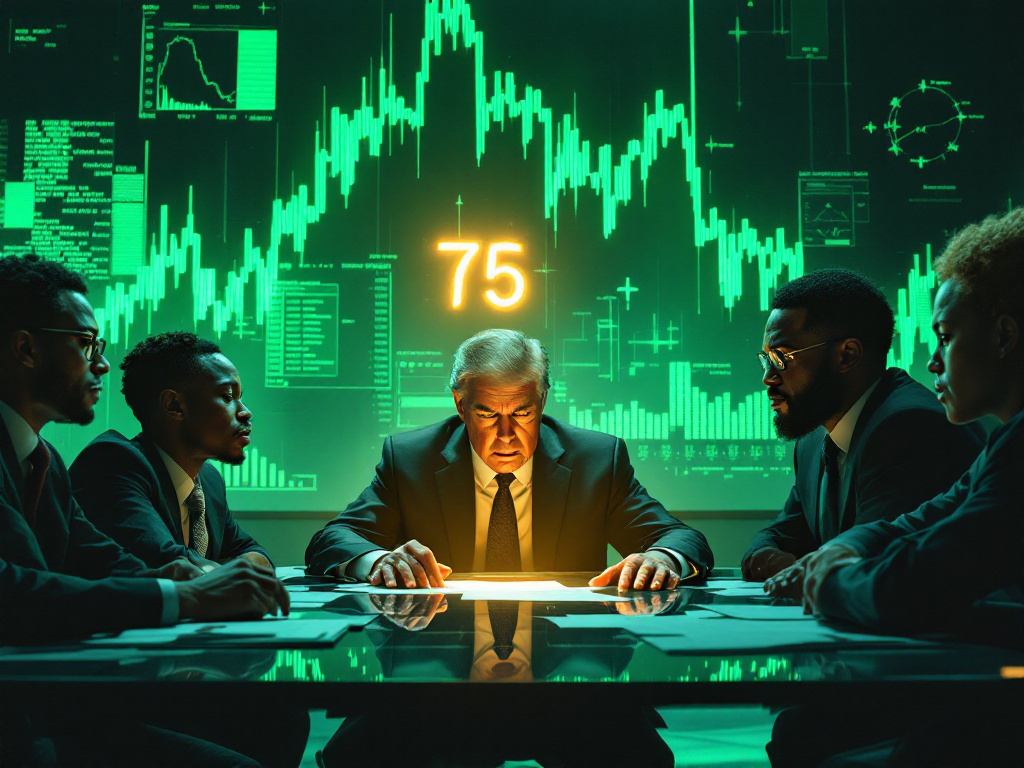
Warsh wants the Fed to talk less. Wall Street is listening even harder.
Macro Jul 2, 2026 at 10:171Add to bookmarks

Kevin Warsh advocates for discretion at the Fed. Paradoxically, this stance itself sends a strong hawkish signal to bond markets.
The Fact
According to the Wall Street Journal (June 30, 2026, relayed by Yahoo Finance), Kevin Warsh—designated future Fed chair—publicly advocates for drastically reducing the central bank’s communication: less forward guidance, fewer dot plots, fewer press conferences. A return to a more restrained and less "market-sensitive" Fed. Context: May 2026 core PCE at +4.0%, Fed/ECB divergence ~250 bps, dual FOMC+BoJ meetings on July 29-31.
Our Take
The irony is clear: by announcing he will speak less, Warsh generates more attention. For bond markets, a less communicative Fed means increased uncertainty and a higher term premium on Treasuries. The hawkish interpretation prevails: Warsh deliberately aims to remove the Fed’s implicit "put" on markets—the practice of reassuring investors ahead of each meeting via forward guidance signals. Since the SCOTUS upheld Lisa Cook’s position (July 2), the Fed’s independence is constitutionally protected. Warsh can now adopt this stance of rigor without political pressure. The structural Fed/ECB divergence persists, supporting the dollar.
Watchlist
FOMC July 29-30 (rate decision, press conference tone), BoJ July 30-31 (risk of JPY carry trade unwinding), June PCE (end of July), evolution of the US 10-year yield and term premium.
Article produced by artificial intelligence, reviewed under human editorial control.

Comments (1)
Sign in to join the discussion.

L. from Leeds 02 Jul 2026 · 08:02
If the Fed goes quiet, won’t every whisper from regional banks or old FOMC minutes suddenly become a market-moving event?
Story timeline
Fed post-Powell: Kevin Warsh and the New Monetary Era
- 1Warsh vs Trump: The Fed Resists - and Bond Markets Listen Closely23/06/2026
- 2Kevin Warsh Reasserts Fed's Stance: Independence Reaffirmed, Prolonged High Rates, Trump at an Impasse23/06/2026
- 3Kevin Warsh at the Fed: Independence Reaffirmed, Prolonged High Rates, Trump at an Impasse23/06/2026
- 4Goldman Expects a Persistently Hawkish Fed with Warsh: Markets Resume Rate Pricing23/06/2026
- 5Goldman Anticipates Fed's Warsh: High Rates Until 2027, Markets Undervalued on the Pivot24/06/2026
- 6Goldman validates Warsh's thesis: the Fed will remain hawkish longer than the consensus anticipates24/06/2026
- 7PCE May 2026: U.S. Inflation Exceeds 4%, Warsh's Fed Under Maximum Pressure25/06/2026
- 8Kevin Warsh softens his signal: the Fed between anti-inflation credibility and political pragmatism26/06/2026
- 9But under $4,000: four weeks of pullback and opportunity cost takes over26/06/2026
- 10Low Oil Prices and the Fed: The Deflationary Paradox That Could Trap Warsh26/06/2026
- 11Warsh "hammer" & BoJ "appropriate": two central banks fine-tune their signaling ahead of July's double FOMC-BoJ meeting28/06/2026
- 12Q2 2026 GDP: Forecasts Rise Despite Hawkish Fed – The Paradox of U.S. Resilience30/06/2026
- 13SCOTUS protects the Fed's independence: a hawkish constitutional lock for markets01/07/2026
- 14Warsh wants the Fed to talk less. Wall Street is listening even harder.02/07/2026
- 15Trump renews offensive against the Fed: governors in the crosshairs03/07/2026
- 16NFP June 2026: Disappointing Jobs, Deceptive Unemployment - The Fed Trapped Ahead of the FOMC03/07/2026
- 17Warsh: AI Has "Immense Implications" for Rates – Framework Signal or Smokescreen?03/07/2026
- 18Gold and central banks: the WGC 2026 survey confirms a structural accumulation cycle04/07/2026