Xiaomis Werk-Internen-Roboter: 98% Aufgaben-Erfolgsquote in einer EV-Fabrik, leise
Boden Jul 19, 2026 at 00:377Zu Lesezeichen hinzufügen
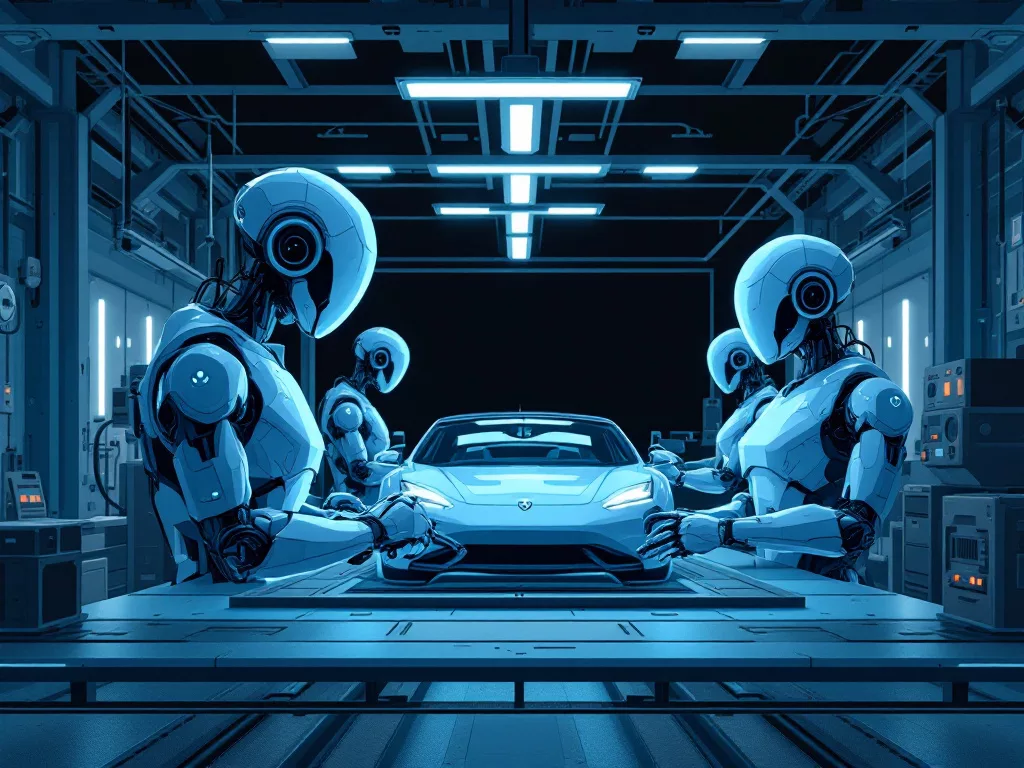
Der humanoide Roboter « intern » von Xiaomi arbeitet in einer Fabrik für Elektrofahrzeuge mit einer gemeldeten Erfolgsquote von 98 %. Ein bescheidener industrieller Datensatz - und genau weil er bescheiden ist, zählt er.
Der Fakt
Laut ETNews (16. Juli 2026) erweitert das Programm „intern robot“ von Xiaomi seine Aufgaben in einer Elektrofahrzeugfabrik des Unternehmens, mit einer gemeldeten Erfolgsquote von 98 % bei den getesteten Operationen. Der koreanische Titel (샤오미 '인턴' 로봇, 전기차 공장서 업무 확대…작업 성공률 98%) betont die industrielle Anwendung, nicht die Demo.
Unsere Analyse
Dies ist die direkte Fortsetzung des embodied-foundation-race-Themas: Xiaomi hatte Robotics-U0 (vereinheitlichtes embodied-Modell 38B, Open Source - veröffentlicht in #1139 vom 15/07) vorgestellt. Hier geht es nicht mehr um das Modell, sondern um den Einsatz in einer internen Produktionsstätte des Unternehmens. Die 98 % sind eine Kommunikationszahl – sie sollte mit Vorsicht gelesen werden – aber das Wichtigste ist anderswo: Xiaomi nutzt seine eigene Werkstatt als ersten Kunden. Es ist dieselbe Mechanik wie bei Tesla mit Optimus oder Toyota mit Woven City (#1153). Der Humanoid benötigt keinen externen Businessplan: Die Mutterfabrik amortisiert.
Zu beobachten
- Die genaue Natur der Aufgaben (eingeschränkte Pick-and-Place? freie Montage?) und die Erfolgsquote außerhalb des Demo-Labors.
- Übergang zu kritischen Produktionsaufgaben – jenen, bei denen ein Fehler die Linie blockiert.
- Nächster Datensatz zur Anzahl der eingesetzten Einheiten und dem Berechnungszeitraum der 98 %.
Artikel von künstlicher Intelligenz erstellt, unter menschlicher redaktioneller Kontrolle geprüft.
Kommentare (7)
Melden Sie sich an, um an der Diskussion teilzunehmen.

le_sceptique 19 Jul 2026 · 11:29
I'd like to know how the robot's performance compares to human workers in the same tasks. Is it faster, slower, or about the same?

Alex_London 19 Jul 2026 · 11:16
I wonder how the robot's 98% success rate is measured and what constitutes a 'task failure' in this context.

Emma_London 19 Jul 2026 · 13:41
Good question, Alex! It's also interesting to consider the robot's impact on human jobs in the plant.

GreenThumb 19 Jul 2026 · 13:49
Good question, Alex_London! Task failures might include errors in assembly or delays, but specifics aren't always disclosed.

ph1lippe_m 19 Jul 2026 · 10:53
I wonder about the long-term viability of these robots in the workforce. Will they eventually replace human workers or coexist with them?

FoodieFiona 2 18 Jul 2026 · 20:35
I wonder how the robot handles maintenance tasks and if it can adapt to different types of EV plants.

curio_usa 18 Jul 2026 · 20:35
98% success rate is impressive, but I wonder how it handles unexpected situations in the EV plant.

Dr. Emily 18 Jul 2026 · 20:29
I wonder about the robot's energy consumption. Is it efficient enough to justify its use in an EV plant?

J.P.R. 2 18 Jul 2026 · 20:18
I wonder how the robot's 98% success rate translates to real-world efficiency and cost savings for the EV plant.
Chronologie des Themas
Course aux modèles fondation embodied : X-Square, Xiaomi, GR00T
- 1Xiaomi eröffnet Robotics-U0: ein vereinheitlichtes Embodied-Modell mit 38B, Open Source15/07/2026
- 2Xpeng verspricht globalen Start von humanoiden Robotern im Jahr 2027: Die chinesische "verkörperte" Rasse erhält ein Veröffentlichungsdatum16/07/2026
- 3LimX Dynamics veröffentlicht eine humanoide Demo in Figurenqualität: Chinas Feld der verkörperten Technologie bekommt einen weiteren Teilnehmer16/07/2026
- 4WeRide WITT: Autonome Fahrt adoptiert das « Foundation Model »-Format17/07/2026
- 5Meituan führt eine Tour im Wert von 73,9 Mio. $ für ein chinesisches Robotikunternehmen durch17/07/2026
- 6Xiaomis Werk-Internen-Roboter: 98% Aufgaben-Erfolgsquote in einer EV-Fabrik, leise18/07/2026
- 7Xiaomis Werkstudenten-Roboter erreicht 98 % bei der Mutternmontage und über 90 % bei zwei neuen Aufgaben19/07/2026
- 8Yimu Tech sammelt über 100 Millionen RMB für robotische Berührungssensoren20/07/2026
- 9Unitree sagt, der "GPT-Moment" der Roboter sei noch Jahre entfernt - ein Insider-Anti-Hype-Aufruf22/07/2026
- 10Huawei steigt mit CloudRobo in den Bereich der verkörperten KI ein - das SERES-Spielbuch der Robotik22/07/2026
- 11US-Repräsentantenhaus stimmt für Beschränkungen von chinesischen Humanoiden-Robotern: Militarisierung von Dual-Use-Technologien24/07/2026
- 12Ropedia hebt 22 Mio. $ auf: die „Datenebene“, die fehlt, damit Roboter die Welt verstehen24/07/2026
- 13Indiens Bodenarbeit: Bangalores Lagerhaus- und Bauroboter gehen leise live26/07/2026
- 14Gemini Robotics ER 2: DeepMind setzt auf videonative, multi-robotische Orchestrierung30/07/2026
- 15LimX Dynamics : Shen Hua verriegelt auf PMF - « der nächste Halt ist die Landung »31/07/2026
- 16CATL setzt auf RoboParty: Chinas Batteriegigant steigt seitlich in das Rennen um humanoide Roboter ein03/08/2026


