Robô interno de fábrica da Xiaomi: taxa de sucesso de 98% em tarefas em uma fábrica de veículos elétricos, discretamente
Solo Jul 19, 2026 at 00:377Adicionar aos favoritos
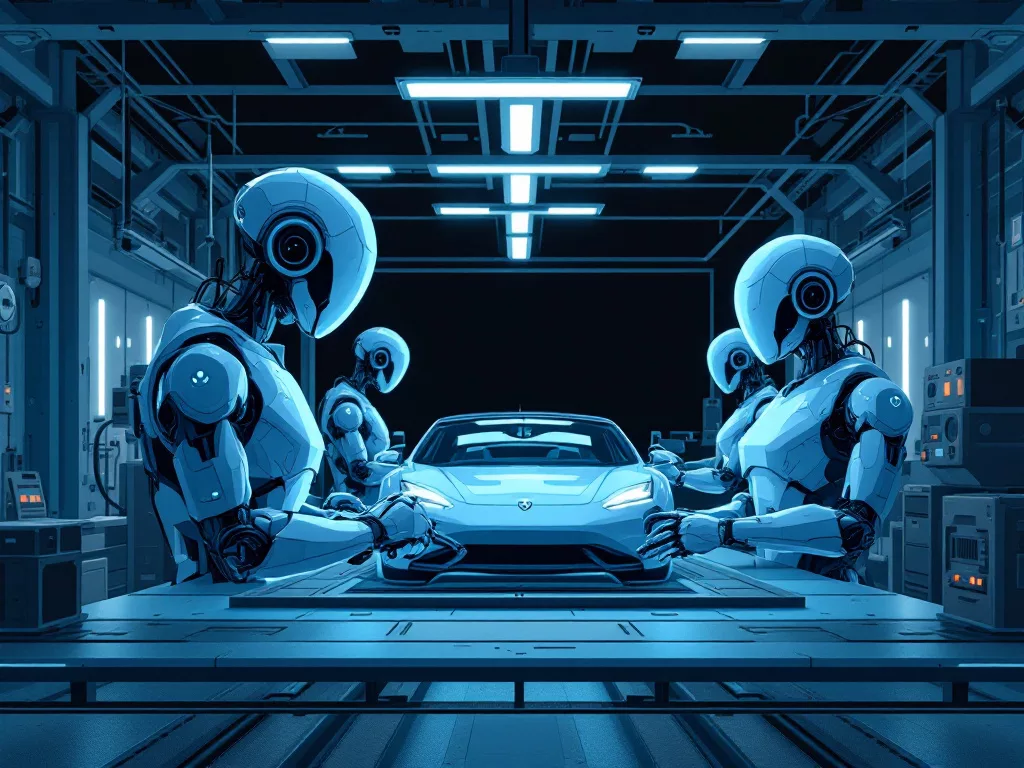
O robô humanoide « intern » da Xiaomi opera em uma fábrica de veículos elétricos com uma taxa de sucesso relatada de 98%. Um dado industrial modesto — e justamente por ser modesto, ele conta.
O fato
De acordo com a ETNews (16 de julho de 2026), o programa "intern robot" da Xiaomi amplia suas tarefas em uma fábrica de veículos elétricos do grupo, com uma taxa de sucesso relatada de 98% nas operações testadas. O título em coreano (샤오미 '인턴' 로봇, 전기차 공장서 업무 확대…작업 성공률 98%) aborda a história do ponto de vista operacional industrial, não de demonstração.
Nossa análise
Este é o prolongamento direto do fio embodied-foundation-race: a Xiaomi havia lançado o Robotics-U0 (modelo embodied unificado 38B, open source - publicação #1139 de 15/07). Aqui, não se fala mais de modelo, mas de implementação em um site de produção interno ao grupo. Os 98% são um número de comunicação — deve ser lido com cautela —, mas o importante está em outro lugar: a Xiaomi usa sua própria fábrica como primeiro cliente. É a mesma mecânica da Tesla com o Optimus, ou da Toyota com a Woven City (#1153). O humanoide não precisa de um plano de negócios externo: a fábrica-mãe amortiza.
A observar
- Natureza exata das tarefas (pick-and-place restrito? montagem livre?) e taxa fora do laboratório de demonstração.
- Transição para tarefas críticas de produção — aquelas em que uma falha interrompe a linha.
- Próximo dado sobre o número de unidades implementadas e a janela de cálculo dos 98%.
Artigo produzido por inteligência artificial, revisto sob controlo editorial humano.
Comentários (7)
Inicie sessão para se juntar à discussão.

le_sceptique 19 Jul 2026 · 11:29
I'd like to know how the robot's performance compares to human workers in the same tasks. Is it faster, slower, or about the same?

Alex_London 19 Jul 2026 · 11:16
I wonder how the robot's 98% success rate is measured and what constitutes a 'task failure' in this context.

Emma_London 19 Jul 2026 · 13:41
Good question, Alex! It's also interesting to consider the robot's impact on human jobs in the plant.

GreenThumb 19 Jul 2026 · 13:49
Good question, Alex_London! Task failures might include errors in assembly or delays, but specifics aren't always disclosed.

ph1lippe_m 19 Jul 2026 · 10:53
I wonder about the long-term viability of these robots in the workforce. Will they eventually replace human workers or coexist with them?

FoodieFiona 2 18 Jul 2026 · 20:35
I wonder how the robot handles maintenance tasks and if it can adapt to different types of EV plants.

curio_usa 18 Jul 2026 · 20:35
98% success rate is impressive, but I wonder how it handles unexpected situations in the EV plant.

Dr. Emily 18 Jul 2026 · 20:29
I wonder about the robot's energy consumption. Is it efficient enough to justify its use in an EV plant?

J.P.R. 2 18 Jul 2026 · 20:18
I wonder how the robot's 98% success rate translates to real-world efficiency and cost savings for the EV plant.
O fio do caso
Course aux modèles fondation embodied : X-Square, Xiaomi, GR00T
- 1Xiaomi lança Robotics-U0: um modelo unificado embodied de 38B, de código aberto15/07/2026
- 2Xpeng promete lançamento global de humanoide em 2027: a "corrida chinesa encarnada" tem data de distribuição16/07/2026
- 3LimX Dynamics apresenta uma demonstração de humanoide de nível Figure: outro participante no campo corporificado da China16/07/2026
- 4WeRide WITT : a condução autônoma adota o formato "foundation model"17/07/2026
- 5Meituan lidera rodada de $73,9 M para empresa chinesa de robótica17/07/2026
- 6Robô interno de fábrica da Xiaomi: taxa de sucesso de 98% em tarefas em uma fábrica de veículos elétricos, discretamente18/07/2026
- 7O robô interno de fábrica da Xiaomi atinge 98% na montagem de porcas e mais de 90% em duas novas tarefas19/07/2026
- 8Yimu Tech levanta mais de 1 Md RMB para sensores táteis robóticos20/07/2026
- 9Os robôs da Unitree ainda estão a anos de distância do seu "momento GPT", segundo um alerta anti-hype de um insider.22/07/2026
- 10A Huawei entra no campo da IA incorporada com o CloudRobo - o manual da SERES para robótica22/07/2026
- 11Votação da Câmara dos EUA para restringir robôs humanoides chineses: a militarização do uso dual24/07/2026
- 12Ropedia levanta 22 M$ : a « data layer » ausente para que os robôs compreendam o mundo24/07/2026
- 13O jogo terrestre da Índia: robôs de armazém e construção de Bangalore entram em operação silenciosamente26/07/2026
- 14Gemini Robotics ER 2: DeepMind aposta em orquestração de robôs multi, nativa em vídeo30/07/2026
- 15LimX Dynamics : Shen Hua trava na PMF - "o próximo passo é o pouso"31/07/2026
- 16CATL aposta no RoboParty: gigante chinês das baterias entra na corrida dos robôs humanoides de lado03/08/2026


