Cobalt & EV: LFP Chemistry Hasn’t Eliminated Risk - It Has Shifted It
TransitionSubscribers only Jun 23, 2026 at 04:285Add to bookmarks
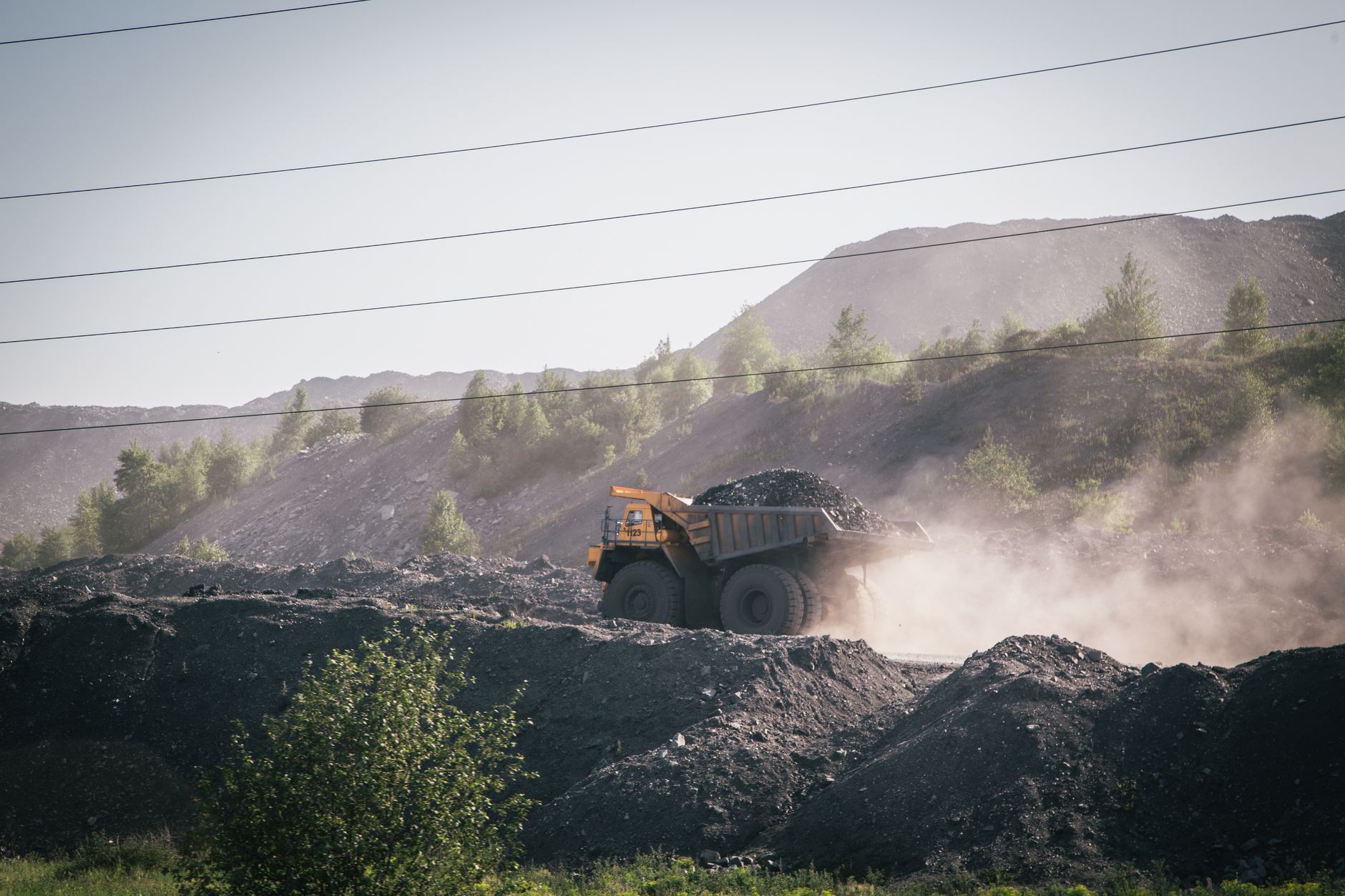
The EV industry believed it had freed itself from cobalt by massively adopting LFP chemistry. The latest report on supply disruptions in the DRC shows that the risk has not vanished-it has shifted to other links in the chain.
Context
Our analysis #504 documented the "phantom cobalt" thesis: the EV sector widely communicated its transition to LFP chemistry (lithium iron phosphate, cobalt-free), but residual supply risks remained intact. A new report reinforces this diagnosis: disruptions in the Democratic Republic of Congo (DRC), which produces ~70% of the world's cobalt, are intensifying-with cascading implications for segments that have not yet completed their transition.
Data
- The DRC accounts for 70% of global cobalt production (USGS, 2025 data), followed distantly by Russia (~4%) and the Philippines (~3%).
- Cobalt prices on the LME fluctuate around $26,000-28,000/tonne (June 2026), showing a slight recovery after the 2024 low (below $25,000) but far from the 2022 peaks ($80,000+).
- The share of LFP batteries in new global EV registrations reached 45% in 2025 (BloombergNEF), driven primarily by the Chinese market (BYD, CATL).
- NMC 811 and NCA chemistries (containing cobalt) still dominate the premium segment and US/European markets for long-range vehicles.
- Chinese refiners' cobalt inventories dropped by 18% in 6 months (Wood Mackenzie, Q1 2026), signaling upstream supply chain tension.
Analysis
The LFP transition has indeed reduced automakers' direct exposure to cobalt-but it remains incomplete and geographically skewed. In China, CATL and BYD have successfully scaled LFP. In Europe and the United States, the premium segment (Tesla Model S/X, BMW i7, Mercedes EQS) and commercial vehicles with high range requirements remain dependent on NMC chemistries.
Furthermore, the LFP substitution has created a new concentration risk: battery-grade lithium (spodumene, brine lithium) and industrial phosphate are now the critical links-each with its own risk geography (Australia, Chile, Morocco for phosphates).
The cobalt disruption in the DRC has not disappeared from the equation: it now more selectively impacts high-value segments, which are also those with the highest margins and longest contracts. A 15-20% cobalt supply shock would mechanically increase NMC battery costs within 12-18 months-the incompressible resourcing timeline.
Probability-Weighted Scenarios
- Central scenario (50%): DRC disruptions remain localized (regional conflicts, logistics), cobalt prices rise to $35,000-40,000/tonne by late 2026. Premium automakers absorb a ~2-3% battery cost increase. No systemic shock.
- Tension scenario (30%): Geopolitical escalation in the DRC (elections, militia instability) + diplomatic tensions between Kinshasa and Beijing reduce extraction by 20-25%. Cobalt exceeds $50,000/tonne. NMC automakers (Tesla outside China, Stellantis, BMW) face production delays or price hikes.
- Decoupling scenario (20%): Faster-than-expected LFP adoption in Europe/US, reducing long-term cobalt demand. Prices fall below $20,000/tonne; DRC mines cut production due to unprofitability-massive disinvestment.
Portfolio Implications
- Long cobalt via physical instruments or mining: Glencore (GLEN LN, ~30% of revenue exposed to cobalt), Eurasian Resources Group (private). Play the short-term tension if the tension scenario materializes, but with a stop-loss-cobalt could remain depressed if LFP accelerates.
- Short-term NMC premium: Automakers with the highest exposure (Stellantis, BMW) warrant closer monitoring of battery costs in their Q2-Q3 2026 reports.
- LFP angle: CATL, BYD (listed in Hong Kong) structurally benefit from substitution-but already priced in.
Risks & Blind Spots
- Accelerated substitution risk: If Tesla adopted LFP for the US Model 3/Y, American cobalt demand would collapse-putting downward pressure on prices.
- Dual geopolitical risk: China controls ~80% of global cobalt refining-a US-China trade tension could block flows to Western automakers regardless of DRC production.
- Blind spot: Battery recycling (Urban Mining, Umicore, Li-Cycle) is gaining traction-by 2030, it could cover 10-15% of cobalt demand, mitigating primary supply shocks.
To Monitor
- LME cobalt spot prices (weekly updates).
- DRC production data published by the EITI (Extractive Industries Transparency Initiative).
- Premium automakers' battery sourcing announcements during Q2 2026 earnings.
- Regulatory progress on minimum recycled content in batteries (EU Batteries Regulation, effective 2027).
Content reserved for members
Create a free account to access all our content and the weekly review.
Article produced by artificial intelligence, reviewed under human editorial control.

Comments (5)
Sign in to join the discussion.

EconEddie_89 23 Jun 2026 · 11:28
LFP dodged cobalt bullets but now we’re staring at lithium bottlenecks-same game, different choke point.

CurioBretagne 23 Jun 2026 · 09:21
LFP a réduit la pression sur le cobalt, mais si on creuse les réserves de lithium, on voit que 80 % viennent de trois pays - ça sent la nouvelle OPEP.

EconEddie_89 23 Jun 2026 · 08:32
LFP’s lithium dependency isn’t just a bottleneck-it’s a geopolitical time bomb. Chile’s brine nationalization in ‘25 proved we swapped one unstable supply chain for another.

J.P.R. 23 Jun 2026 · 08:06
LFP didn’t just shift risk-it concentrated it. Lithium’s supply chain is now the single point of failure the cobalt lobby warned us about.

ekonomist_74 23 Jun 2026 · 06:28
LFP снизил зависимость от кобальта, но риски никуда не делись - просто перетекли в другие звенья цепочки. История повторяется.
Story timeline
Cobalt & EV: The Phantom Supply Risk
- 1Cobalt & EV: LFP Chemistry Hasn’t Eliminated Risk - It Has Shifted It23/06/2026
- 2Cobalt & EV: LFP chemistry has shifted the supply risk, not eliminated it23/06/2026
- 3Cobalt & EV: LFP chemistry has shifted the supply risk, not eliminated it23/06/2026
- 4Cobalt & EV: LFP Chemistry Reduces Risk, But Does Not Eliminate It - Residual Vulnerabilities Persist24/06/2026
- 5Cobalt & EV: The Phantom Supply Risk Resurfaces Despite the Rise of LFP25/06/2026