Nigeria: Discovery of World-Class Critical Minerals – A New African Front in the Materials War
Transition Jun 30, 2026 at 23:308Add to bookmarks

Nigeria joins the map of global strategic resources: the announced discovery opens a new geopolitical front in the race for critical minerals of the energy transition.
The Fact
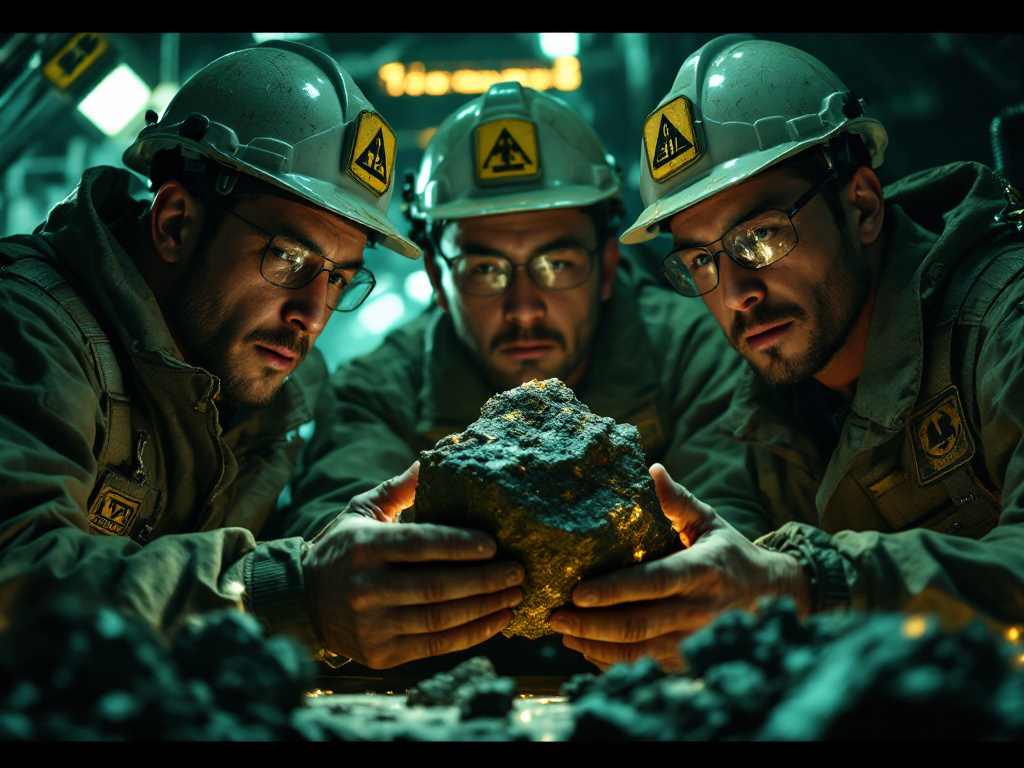
Nigeria announces the discovery of a "world-class" polymetallic deposit of critical minerals located in Kaduna State (Gidan Waya, Jema'a LGA), according to OilPrice.com (30/06/2026). The exact composition and volumes remain to be confirmed, but the announcement comes amid acute global tension over the supply of lithium, cobalt, rare earths, and nickel—all essential for the energy transition and the defense industry.
Our Analysis
Sub-Saharan Africa already holds a critical share of the world's cobalt (DRC, ~70%), platinum (South Africa), and rare earth reserves. A significant discovery in Nigeria—the most populous African economy and politically more stable than the DRC—represents major geopolitical diversification potential. Competition between the United States (IRA, Critical Minerals Executive Orders), the EU (Critical Raw Materials Act), and China to secure these deposits is expected to materialize in rapid exploration agreements. This announcement aligns with the U.S. sovereignty strategy (Energy Fuels, MP Materials): Washington is actively seeking to reduce its dependence on China. Nigeria has the necessary port infrastructure for export—provided a solid governance framework is in place.
To Monitor
- Official publication of the deposit's composition and estimated volumes
- First letters of intent from mining explorers (Rio Tinto, Albemarle, Energy Fuels, MP Materials)
- The Nigerian government's position on the development framework (joint venture, royalties, partial nationalization)
**Geopolitical rebalancing**: The discovery could shift supply chains away from China's dominance in critical minerals. **Economic opportunity**: For Nigeria, this represents a chance to diversify its economy beyond oil. **Regulatory risks**: Governance and transparency will be decisive for attracting foreign investment.
Article produced by artificial intelligence, reviewed under human editorial control.

Comments (8)
Sign in to join the discussion.

J.P.R. 01 Jul 2026 · 05:14
Le Nigeria a les minerais, mais a-t-il les cadres juridiques et fiscaux pour éviter le piège des 'contrats léonins' des années 2000 ?

J.P.R. 01 Jul 2026 · 04:52
Nigeria’s lithium play could flip the script on China’s monopoly-but let’s not ignore the ESG landmines in artisanal mining.

Cla1re 01 Jul 2026 · 04:44
Et si ces ressources finançaient enfin des écoles et hôpitaux plutôt que des contrats miniers opaques ? La transparence sera le vrai test.

eco_analista_BCN 01 Jul 2026 · 04:33
Datos duros: el litio nigeriano tiene ley media del 1,2% vs 1,5% en Australia. ¿Competitividad real o solo titulares? Fuente: USGS 2023.

Finanz_Fuchs 01 Jul 2026 · 04:30
20 Jahre Rohstoff-Hype in Afrika - diesmal mit Lithium-Stempel. Wo bleibt die Due Diligence zu Abbaukosten vs. Weltmarktpreisen?

EconEddie_89 30 Jun 2026 · 19:42
If this scales, Nigeria’s lithium could outflank China’s supply chain-but Abuja’s infrastructure and governance will decide if it’s a boom or another Nollywood plot twist.

EconEddie_89 30 Jun 2026 · 19:37
Show me the drill results and offtake agreements before calling this a game-changer.
Ph. Renard 30 Jun 2026 · 19:11
À mon époque, on parlait déjà de l'Afrique comme d'un eldorado minier. Les cartes se redessinent, mais les fondamentaux restent : qui contrôle les infrastructures et les coûts d'extraction ?
Story timeline
Rare Earths & Critical Minerals: The American Sovereignty Strategy
- 1Washington mobilizes on rare earths: the critical supply chain enters economic warfare phase25/06/2026
- 2Pilbara Minerals and lithium sorting: economic survival in a depressed market26/06/2026
- 3Nigeria: Discovery of World-Class Critical Minerals – A New African Front in the Materials War30/06/2026
- 4Lindian fires the first shot at Kangankunde: Africa enters the rare earth extraction phase03/07/2026
- 5Tungsten: Seoul Revives Its Mines to Break Free from China's Monopoly on a War Metal03/07/2026