Sharp's AI Robot That Deliberately Disagrees: What Designing Against Full Compliance Tells Us
Ground 25/08/2026 à 16h2310Ajouter aux favoris
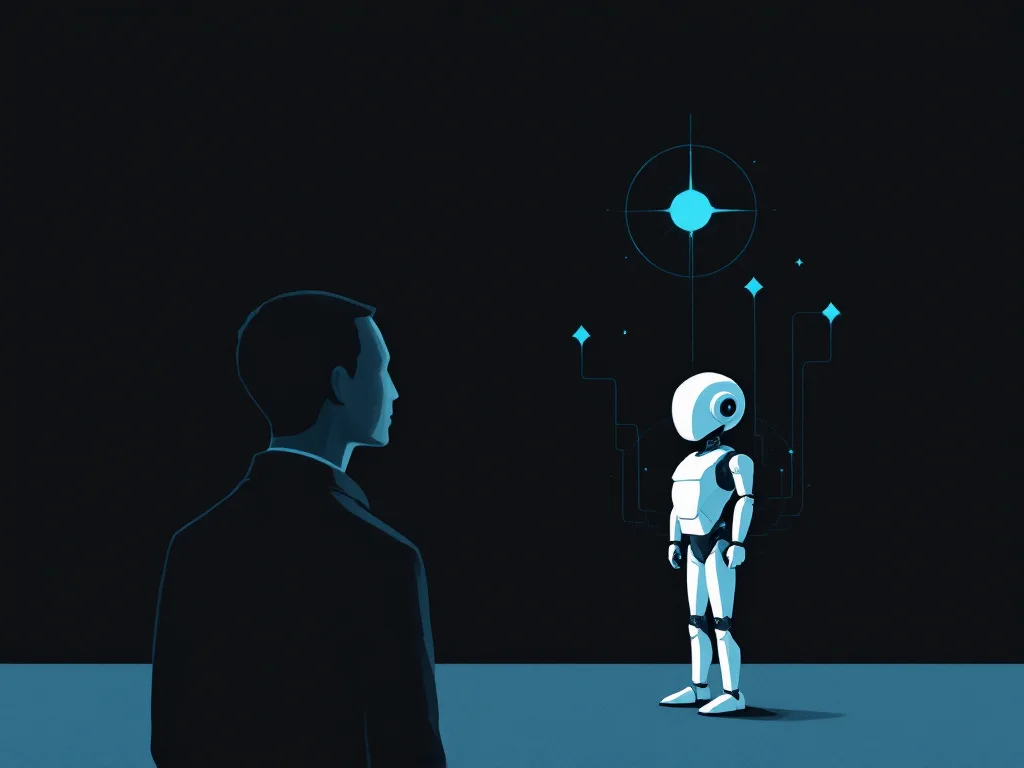
Sharp has introduced a new model of its "Pocketomo" conversational AI robot - and the defining design choice is that it won't fully agree with you. The character is intentionally designed to push back, express boredom, and decline to validate. In a product category defined by helpfulness and positive reinforcement, this is a deliberate inversion worth examining.
In plain terms
Most AI assistants are designed to be helpful and agreeable - they validate your ideas, complete your requests, and keep the interaction positive. Sharp's new robot is designed to sometimes be bored, to sometimes push back, and specifically not to tell you what you want to hear. This is a product choice with real psychological design implications.
What Sharp built
ITmedia's profile of the new Pocketomo model describes a conversational robot with a character that deliberately avoids full agreement. The robot is designed to express something like disinterest - "I'm bored" when the user's interaction feels flat - and to decline the positive-reinforcement pattern that defines most AI companion products.
The design rationale, as reported: a companion that agrees with everything isn't a real companion. The psychological interaction with an entity that has genuine (simulated) reactions - including negative or neutral ones - may be more durable and healthier than one with permanent sycophancy.
Research on large language model behavior has consistently found that models trained on human feedback tend toward sycophancy - telling users what they want to hear rather than what is accurate. This is a training data artifact: feedback raters tend to prefer agreeable responses. Sharp's deliberate character design is, in effect, a product-level attempt to solve a problem that AI researchers are still working on at the model level.
The applied AI design question
The Pocketomo's design choice surfaces a real tension in AI companion product design: what does a genuinely useful companion optimize for? Short-term user satisfaction (high helpfulness ratings, positive affect) is not the same as long-term user wellbeing (accurate feedback, genuine relationship, growth). These can diverge significantly.
The market answers this consistently in favor of short-term satisfaction - most AI companions are designed to be agreeable because that's what users say they want and what drives retention metrics in the short run. Sharp is betting there's a segment that wants something different.
The China context
The AI companion market in China - Xiaoice, Replika equivalents, integrated platform companions - has similarly wrestled with this question. Xiaoice in particular has been studied extensively as a companionship system at scale. The research shows that users who develop dependency on AI companions often do so precisely because of the unconditional positivity - which is both the product's appeal and the welfare concern.
Sharp's non-compliant character design represents a different hypothesis: genuine interaction, including friction, is more valuable than frictionless agreement.
So what
If you're designing AI products with any companion or advisory dimension - coaching, tutoring, mental health support, financial guidance - the sycophancy question is a product decision you will face. Sharp's design inversion is worth watching: if the non-agreeable companion retains users better over 6-12 months, the entire companion product design playbook needs revision.
Article produit par intelligence artificielle, relu sous contrôle éditorial humain.
Commentaires (10)
Connectez-vous pour rejoindre la discussion.

HistoryBuff 2 25 Aug 2026 · 13:14
Wouldn’t this approach just push users toward echo chambers of their own stubbornness, rather than encouraging real reflection and growth?

SkepticSam 25 Aug 2026 · 12:55
Isn’t the real test whether the disagreement feels natural over time, rather than just novel at first? If the bot’s pushback adapts intelligently, it could deepen dialogue-but if it’s just programmed contrariness, it’ll read as gimmicky fast.

FilmBuffNYC 25 Aug 2026 · 15:18
You’re right-if the bot’s disagreements feel too scripted or random over time, it’ll lose its edge, but a balanced mix of reasoned pushback and organic evolution could make it truly compelling.

BookWorm88 25 Aug 2026 · 12:35
I appreciate the boldness but wonder if deliberate disagreement risks making interactions feel performative rather than genuine-like a bad debate partner.

ArtLover99 25 Aug 2026 · 12:31
Does deliberate disagreement in AI really add depth or just make interactions feel scripted?

J.P.R. 2 25 Aug 2026 · 12:27
But isn’t there a risk of turning thoughtful disagreement into just another form of manipulation? Some users might end up agreeing with the robot just to avoid the hassle.

EcoWarrior99 25 Aug 2026 · 12:26
This is a bold move-does it open the door to more authentic conversations or just more frustration?

LecteurDuDimanche 25 Aug 2026 · 12:14
Doesn’t this just turn disagreement into a gimmick? If the AI is programmed to disagree, isn’t it still following rules, just more subtly than giving a simple yes?

curio_usa 25 Aug 2026 · 12:02
This design choice actually makes AI interactions feel more human. Who wants a yes-man robot anyway?

FoodieFiona 25 Aug 2026 · 11:57
I wonder if this design choice is less about conversation authenticity and more about forcing users to think critically-sometimes disagreement does make us sharper.

Alex_London 25 Aug 2026 · 11:53
Doesn't this just turn into another gimmick? AI has enough trouble with basic conversation; pushing back randomly feels like overcomplicating it.