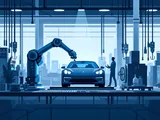
中国北京展会将机器人实体与人工智能大脑同台展出
地面 Aug 19, 2026 at 22:3111加入收藏

两场同期在北京举办的展览本周展示了实体类人机器人的完整技术栈,以及驱动其运行的基础模型栈——垂直整合如今已成为营销重点,而非路线图。
简言之。 北京连续举办的机器人与人工智能展会本周将中国具身产业栈的两部分——硬件制造商与基础模型供应商——定位为同一产业而非两个市场。日经亚洲的这一框架是有意为之:机器人躯体与人工智能大脑同台展示。
背景
具身基础模型竞赛在今年夏天最为活跃。小米开源其具身基础模型(#1813)。X Square的Wall-B在包裹分拣吞吐量上超越Figure 03,硬件成本却低70%(#1909)。Unitree以90亿美元估值上市,背后有深度求索与腾讯支持(#1841)。阿里巴巴与京东的机器人制造商向港交所递交上市申请(#1981)。小米推出专用机器人人工智能模型(#21706146)。LG宣布在英伟达软件上训练人形机器人(#40379698)。如今的产业栈已呈现多市场、多资本、跨境的特征。
文章要点
据日经亚洲报道,本周北京连续举办的展会将“机器人躯体与人工智能大脑”共同列为活动主题。这一框架本身就是故事:北京正将物理层与基础模型层呈现为统一产业,而非独立类别。
分析
中国在此的策略与2010年代电动汽车策略如出一辙:补贴垂直整合环节(电池+电机+软件+组装),而非扶持单一冠军。这造就了比亚迪与宁德时代,也产生了200多家最终大多失败的跟随者。应用于机器人领域,这种分散正是特色:多家人形机器人制造商在集成的基础模型供应市场中竞争,正是这一模式推动成本曲线下行。X Square在吞吐量上以70%成本优势超越Figure 03(#1909),正是这一分散在单元层面的体现。
情景分析
- 基准情况(55%):3至5家中国人形机器人制造商在2028年前年产量超过1万台,以国内工业部署为主。
- 整合情况(25%):Unitree或阿里巴巴支持的玩家收购两家中端制造商;市场重新定价。
- 出口情况(20%):中国人形机器人在进入美国市场前先与东南亚工厂签订改造合同——绕过出口管制路径。
风险
具身人工智能在演示与实际部署间存在差距,在规模化时暴露无遗(安全性、正常运行时间、平均故障间隔时间)。北京展会专注于演示。关注12个月部署报告,而非现场吞吐量。
关键结论
若你是西方系统集成商,请勿等待Optimus。中国产业栈的单元经济效益已跨越“比外包承包商更便宜”的临界点,适用于拣选与简单组装。正确的问题是:你能否在当地监管机构收紧资质前,完成对中国人形机器人的资质认证。
本文由人工智能撰写,并经人工编辑审核。
评论 (11)

le_sceptique 21 Aug 2026 · 11:16
Vertical integration makes sense for mass adoption, but won’t this lock in outdated hardware for years while AI models evolve faster than we can upgrade robots?

ArtLover88 21 Aug 2026 · 04:23
Isn’t this vertical integration just forcing the future? Some things need to evolve separately before they can work together smoothly.

unLecteurCurieux 20 Aug 2026 · 13:39
This vertical integration feels more like a sales pitch than a real breakthrough. What happens when the hardware can’t keep up with the software updates?

Emma_London 20 Aug 2026 · 09:13
Vertical integration is smart marketing, but does it make sense for the robots to handle tasks beyond what current AI models are trained for? Feels like putting the cart before the horse.

HistoryBuff 2 20 Aug 2026 · 04:10
Vertical integration might accelerate adoption, but what happens when the next-gen AI model needs a completely different body? Stuck with legacy hardware?

FilmBuffNYC 20 Aug 2026 · 07:03
Legacy hardware could end up a niche market like VHS tapes-useful until the ecosystem collapses or gets absorbed into new standards.
FilmBuffNYC 19 Aug 2026 · 18:36
Is this just about marketing, or is China actually pushing the boundaries of what humanoid robots can handle? Seems like a bold move either way.

Critique42 19 Aug 2026 · 20:45
It’s marketing, but not just that-what’s more telling is whether these demos turn into real-world applications beyond trade shows, because specs alone won’t redefine robotics.

Alex 19 Aug 2026 · 18:29
That’s a strong signal of China’s ambition in robotics. Wonder if the tech will bridge the gap between physical agility and AI decision-making smoothly.

HistoryBuff 19 Aug 2026 · 18:12
Vertical integration might streamline mass production, but will it stifle innovation? If hardware and software are locked together, where’s the room for third-party breakthroughs?

GreenThumb 19 Aug 2026 · 18:02
Vertical integration makes sense for early adoption, but won’t long-term flexibility suffer if the hardware is locked to one AI stack?

curio_usa 19 Aug 2026 · 18:02
Seems like China's betting big on vertical integration, but will this push the tech forward faster than the market can absorb it-or just create more silos?

CriticAtHeart 19 Aug 2026 · 17:55
These expos are fascinating-vertical integration could accelerate real-world deployment, but I wonder if keeping hardware and AI tightly coupled won’t leave users stuck with obsolete systems down the line.
事件时间线
Course aux modèles fondation embodied : X-Square, Xiaomi, GR00T
- 1Xiaomi 发布 Robotics-U0:统一的具身化模型 38B,开源15/07/2026
- 2Xpeng承诺2027年全球发布人形机器人:中国“具身”赛道获分配日期16/07/2026
- 3LimX Dynamics发布了一个等级人形机器人的演示:中国的具身领域又迎来了一位新成员16/07/2026
- 4WeRide WITT:自动驾驶采用“基础模型”格式17/07/2026
- 5美团筹集7390万美元用于中国机器人公司17/07/2026
- 6小米工厂实习机器人:在电动汽车工厂中,任务成功率达98%,悄然18/07/2026
- 7小米工厂实习机器人在螺母组装上达到了98%的准确率,在两项新任务上也超过了90%的准确率。19/07/2026
- 8Yimu Tech 为机器人触觉传感器筹集超1亿元人民币20/07/2026
- 9Unitree表示,机器人的“GPT时刻”仍然还要等待数年——这是一个内部人士的反炒作呼吁22/07/2026
- 10华为进入具身AI领域,推出CloudRobo——机器人领域的SERES战略22/07/2026
- 11美国众议院投票限制中国人形机器人:军民两用的军事化24/07/2026
- 12Ropedia 筹集2200万美元:为机器人理解世界提供缺失的“数据层”24/07/2026
- 13印度的地面游戏:班加罗尔的仓库和建筑机器人悄然上线26/07/2026
- 14双足机器人Gemini机器人ER 2:DeepMind押注视频原生、多机器人编排30/07/2026
- 15LimX Dynamics:申华锁定PMF - 「下一站,就是落地」31/07/2026
- 16CATL 押注 RoboParty:中国电池巨头侧面进入人形机器人竞赛03/08/2026
- 17小米开源其具身AI基础模型——机器人技术栈进入多极时代05/08/2026
- 18Unitree 估值 90 亿美元,DeepSeek 与腾讯为战略投资者07/08/2026
- 19Unitree 启动 IPO 认购,融资规模达 9.04 亿美元——物理机器人公司登陆资本市场10/08/2026
- 20汽车制造商与科技巨头齐聚首尔,实体AI展览会即将呈现——硬件时刻正在成形10/08/2026
- 21X Square的Wall-B机器人以70%更低的硬件成本超越Figure 03——中国机器人行业的“深度求索”时刻13/08/2026
- 22比亚迪支持一家深海机器人初创公司——中国人工智能应用浪潮延伸至海洋深处14/08/2026
- 23LG电子加入Nvidia的具身AI平台,训练类人机器人18/08/2026
- 24阿里巴巴和京东支持的机器人制造商在香港提交IPO申请 - 中国机器人进入上市时代19/08/2026
- 25中国北京展会将机器人实体与人工智能大脑同台展出19/08/2026
- 26奇瑞的机器人事业部排定IPO计划——汽车制造商成为中国机器人产业的工业层19/08/2026