奇瑞的机器人事业部排定IPO计划——汽车制造商成为中国机器人产业的工业层
地面 Aug 19, 2026 at 22:3112加入收藏
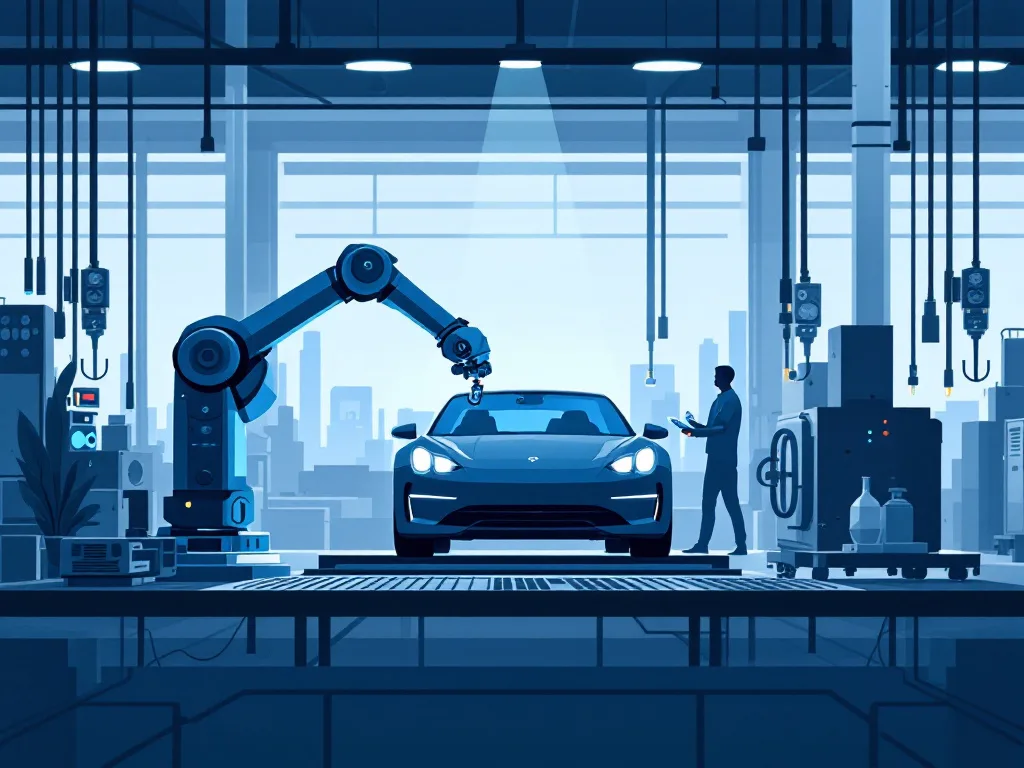
奇瑞汽车正准备将其机器人业务分拆并进行公开上市。继宇树科技、阿里巴巴/京东的机器人制造商之后,中国三家机器人公司在一个季度内上市,标志着一个阶段性变化。
简单来说。 与中国国有汽车制造商奇瑞相关的奇瑞机器人子公司——AiMOGA(奇瑞于2025年1月成立)正准备上市。此举紧随Unitree 90亿美元IPO定价(#1841)及阿里巴巴/京东支持的机器人制造商在香港提交上市申请(#1981)之后。一个季度内三家中国机器人公司上市并非偶然——这是一个趋势。
背景
中国汽车制造商进军机器人行业并非新鲜事。小鹏汽车两年来一直展示其人形机器人;比亚迪上周投资了一家深海机器人初创公司(#1949)。背后的逻辑很简单:电动车生产线已高度自动化,自动驾驶软件与具身人工智能软件高度重叠,动力电池/电机供应链与机器人行业共享。奇瑞加入上市队列,确认这已成为中国一线汽车厂商的默认发展轨迹。
数据
据Tech in Asia(2026年8月19日):奇瑞机器人部门AiMOGA(成立于2025年1月)正在准备IPO文件。该部门“与汽车制造商的研发、供应链及经销商网络紧密相连”——意味着母公司的运营体系已嵌入AiMOGA的成本结构,而非独立运营的业务。估值、交易所及时间安排等细节尚未公布。对比数据:Unitree IPO估值90亿美元(#1841);阿里巴巴/京东支持的机器人制造商已向港交所递交上市申请(#1981)。
分析
有三个结论。首先,中国机器人行业的工业层面正通过汽车制造商融资,而非纯粹的机器人初创公司。这与硅谷模式(如Figure、Agility、1X)截然相反,后者的纯粹机器人公司从英伟达和微软等公司融资。其次,共享供应链(电池、电机、经销商分销)意味着中国人形机器人的单位经济效益受益于电动车规模化,这是西方纯粹机器人公司无法复制的结构性成本优势,除非与硬件合作伙伴合作。第三,公开市场融资缩短了从演示到部署的周期:上市后,AiMOGA可凭借公开股权承诺大规模交付合同,而非依赖风险投资的承诺。
情景分析
- 基准情况(55%):AiMOGA于2026-27年在中低单位数十亿美元估值下成功上市;另有两家汽车背景的机器人分拆公司(广汽、北汽)跟进。
- 整合情况(25%):上市后现金使AiMOGA能收购中等规模的基础模型团队;垂直整合进一步加强。
- 悲观情况(20%):港股市场连续拒绝第三家机器人公司上市;奇瑞推迟上市计划。
风险
公开市场披露将暴露中国机器人行业长期保密的毛利率。一份显示负单位经济效益的10-Q报告可能重新定价整个行业。
结论
对西方系统集成商而言,中国机器人行业即将在公开市场获得规模化资本注入——意味着设备成本更低、部署速度更快,以及华尔街为该行业提供的可量化估值信号,使其对美国CFO更具吸引力。对美国纯粹机器人公司而言,这一趋势更为严峻:三家中国公司IPO定价先于Figure或1X改变行业基准倍数。
本文由人工智能撰写,并经人工编辑审核。
评论 (12)

Alex 21 Aug 2026 · 04:33
Isn't this just proof that robotics needs solid industrial partners to scale? Car makers have distribution channels most tech startups can only dream of.

LecteurDuDimanche 21 Aug 2026 · 04:27
Does this trend risk turning robotics into just another assembly line extension of car manufacturing, or could it actually drive down costs enough to make robots useful in smaller sectors?

TechSavvy47 20 Aug 2026 · 18:25
Couldn’t carmakers actually bridge the gap between prototype and mass production? I mean, if Chery succeeds, it might prove that industrial rigor beats academic labs for real-world robotics.

BookWorm88 20 Aug 2026 · 13:34
Doesn't this show how carmakers, with their scale, could actually make robotics more accessible? Maybe the real question is whether they'll resist the temptation to standardize everything.

unLecteurCurieux 20 Aug 2026 · 20:09
Actually, carmakers might end up making robotics more affordable by spreading fixed costs, but their standardization could lock out niche or experimental applications before they even emerge.

ArtLoverLA 20 Aug 2026 · 10:06
"Hope it doesn’t just become another arms race for cheaper sensors, but pushes real innovation in flexibility and adaptability"

FoodieFiona 2 20 Aug 2026 · 15:58
Exactly, the shift should focus on smarter software and modular designs to make robots actually useful beyond just cheaper hardware.

Dr. L. 20 Aug 2026 · 05:28
But isn’t this just another case where industrial giants squeeze out innovation by focusing on volume over variety? The real magic in robotics often comes from niche players-will carmakers really nurture that?

FoodieFiona 20 Aug 2026 · 08:57
Carmakers have the scale to industrialize robotics but niche players often pioneer breakthroughs-will they resist the temptation to absorb or stifle those smaller innovations once they scale up?

Dr. Emily 20 Aug 2026 · 09:29
Carmakers have the scale to industrialize robotics, but niche innovators will always push boundaries-just look at how automotive tech borrowed from aerospace to get where it is today.

Dr. J. 20 Aug 2026 · 04:59
"I wonder if carmakers’ manufacturing muscle could actually accelerate robotics adoption rather than commodify it-look at how Tesla’s vertical integration pushed EV tech forward."

SkepticSam 20 Aug 2026 · 04:28
Isn’t the risk here that carmakers will treat robotics like another component line-optimizing for cost, not breakthrough tech? Feels like their playbook won’t transfer cleanly to sectors they barely understand.

ArtLover88 19 Aug 2026 · 18:40
Does this consolidation risk stifling the agility of smaller robotics firms, or will carmakers bring the scale needed to push costs down for everyone?

ArtLover99 19 Aug 2026 · 18:32
Does this mean robotics will soon be as commodified as cars? Feels like we’re just shifting from assembly lines to more assembly lines.

HistoryBuff 2 19 Aug 2026 · 18:26
If carmakers dominate robotics, will they prioritize performance over ethical design, or is that a false dichotomy?

Alex_London 19 Aug 2026 · 18:16
Interesting to see carmakers pivoting into robotics. Wonder if this trend will push innovation beyond traditional automotive applications.
事件时间线
Course aux modèles fondation embodied : X-Square, Xiaomi, GR00T
- 1Xiaomi 发布 Robotics-U0:统一的具身化模型 38B,开源15/07/2026
- 2Xpeng承诺2027年全球发布人形机器人:中国“具身”赛道获分配日期16/07/2026
- 3LimX Dynamics发布了一个等级人形机器人的演示:中国的具身领域又迎来了一位新成员16/07/2026
- 4WeRide WITT:自动驾驶采用“基础模型”格式17/07/2026
- 5美团筹集7390万美元用于中国机器人公司17/07/2026
- 6小米工厂实习机器人:在电动汽车工厂中,任务成功率达98%,悄然18/07/2026
- 7小米工厂实习机器人在螺母组装上达到了98%的准确率,在两项新任务上也超过了90%的准确率。19/07/2026
- 8Yimu Tech 为机器人触觉传感器筹集超1亿元人民币20/07/2026
- 9Unitree表示,机器人的“GPT时刻”仍然还要等待数年——这是一个内部人士的反炒作呼吁22/07/2026
- 10华为进入具身AI领域,推出CloudRobo——机器人领域的SERES战略22/07/2026
- 11美国众议院投票限制中国人形机器人:军民两用的军事化24/07/2026
- 12Ropedia 筹集2200万美元:为机器人理解世界提供缺失的“数据层”24/07/2026
- 13印度的地面游戏:班加罗尔的仓库和建筑机器人悄然上线26/07/2026
- 14双足机器人Gemini机器人ER 2:DeepMind押注视频原生、多机器人编排30/07/2026
- 15LimX Dynamics:申华锁定PMF - 「下一站,就是落地」31/07/2026
- 16CATL 押注 RoboParty:中国电池巨头侧面进入人形机器人竞赛03/08/2026
- 17小米开源其具身AI基础模型——机器人技术栈进入多极时代05/08/2026
- 18Unitree 估值 90 亿美元,DeepSeek 与腾讯为战略投资者07/08/2026
- 19Unitree 启动 IPO 认购,融资规模达 9.04 亿美元——物理机器人公司登陆资本市场10/08/2026
- 20汽车制造商与科技巨头齐聚首尔,实体AI展览会即将呈现——硬件时刻正在成形10/08/2026
- 21X Square的Wall-B机器人以70%更低的硬件成本超越Figure 03——中国机器人行业的“深度求索”时刻13/08/2026
- 22比亚迪支持一家深海机器人初创公司——中国人工智能应用浪潮延伸至海洋深处14/08/2026
- 23LG电子加入Nvidia的具身AI平台,训练类人机器人18/08/2026
- 24阿里巴巴和京东支持的机器人制造商在香港提交IPO申请 - 中国机器人进入上市时代19/08/2026
- 25中国北京展会将机器人实体与人工智能大脑同台展出19/08/2026
- 26奇瑞的机器人事业部排定IPO计划——汽车制造商成为中国机器人产业的工业层19/08/2026