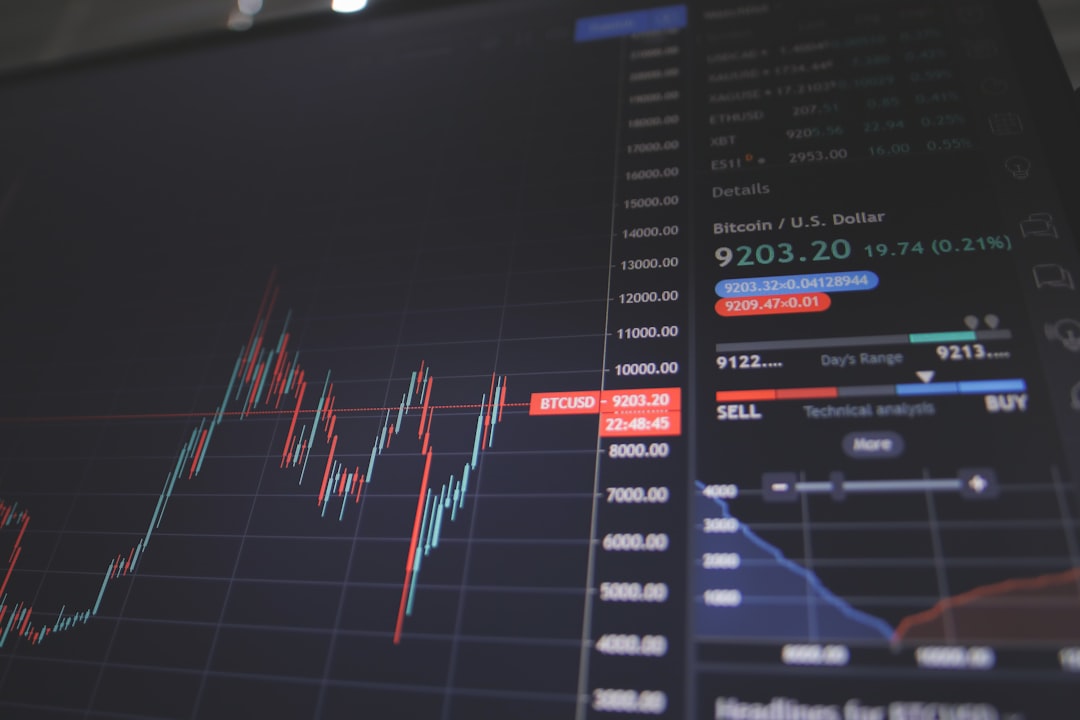
Sell-off Big Tech: Fed's rate reassessment shatters long-duration valuation
MarchésReservado a suscriptores Jun 23, 2026 at 21:447Añadir a favoritos

The Nasdaq-100 drops 3% during the session, global markets follow - the resurgence of hawkish expectations reshuffles the deck across all long-duration assets, from Wall Street to Asia.
Context
On June 23, 2026, global equity markets experienced their sharpest correction of the summer. The Nasdaq-100 fell by 3% during the session-ten tech stocks accounted for the bulk of the decline. The wave spread from Wall Street to Asia (stocks and oil down) and then to Europe, where indices opened lower under a dual catalyst: tech weakness and a reassessment of US interest rates. SpaceX amplified the signal by losing ~$600 billion in market capitalization over three sessions since its June 16 peak.
Data
- Nasdaq-100: -3% on June 23, 2026 (Seeking Alpha / CNBC)
- 10 tech stocks concentrated the bulk of the NDX decline (Seeking Alpha, June 23, 2026)
- SpaceX: -$600 billion in market cap over 3 sessions since the June 16 peak (Seeking Alpha)
- European markets: lower opening, dual pressure from rates + tech (Investing.com, June 23, 2026)
- US futures (night of June 22-23): Dow, S&P 500, Nasdaq sharply down despite Iran signals (Yahoo Finance)
- Asia: stocks and oil down; markets reprice Fed expectations (Yahoo Finance, June 23)
- Barclays raises its S&P 500 target on earnings strength-a contrarian signal (Investing.com)
Analysis
The trigger is not macro but structural: the reassessment of Fed rate expectations. The logic of discounting future cash flows mechanically penalizes long-duration assets-typically mega-cap tech stocks whose valuations rely on projections 5-10 years out. In a hawkish regime (Warsh/Fed), each additional basis point on long-term rates compresses multiples.
The SpaceX sell-off is revealing: when a market cap inflated by the AI/space narrative meets the reality of high-rate bond financing, the market corrects. The Asia-Europe spread-across markets with distinct fundamentals-confirms a systemic repricing, not an isolated sector shock. The 2022 summer analogy holds: same duration mechanics, same correlation between rising long-term rates and tech multiple compression. The difference: in 2022, the Fed was entering a cycle; in 2026, the market is reassessing the duration of the hawkish plateau under Warsh.
Probability-weighted scenarios
- Scenario 1 - Technical consolidation (55%): After leveraged positions are purged, markets consolidate with an additional -3% to -5% decline before finding a floor. Fundamentally strong stocks (Microsoft, Apple) rebound first at support levels.
- Scenario 2 - Sell-off extension (30%): If June employment or core PCE data surprises to the upside, the Nasdaq tests -8% to -12% from its highs. A second wave of de-risking hits stocks most exposed to AI and leverage.
- Scenario 3 - Quick rebound (15%): A positive macro surprise or a dovish statement from a FOMC member brings buyers back to the lows as early as the following week.
Portfolio implications
Reduce exposure to long-duration mega-cap tech stocks until the hawkish plateau is clearly defined. Rotate toward financials (benefiting from high rates on net interest margins), defensives, and discounted European value. Small-cap tech remains particularly vulnerable: double sensitivity to rates and liquidity. Barclays’ position (raising its S&P 500 target on earnings strength) is the contrarian signal to watch closely.
Risks & blind spots
The correction could be healthy and limited if it erases valuation excesses without contaminating fundamentals. Symmetrical upside risk: a positive macro surprise or a Fed rhetorical pivot could send the market higher faster than expected. Tail risk: contagion to investment-grade credit could turn an equity correction into broader systemic stress.
To watch
Upcoming FOMC statements and dot plot (September 2026) · June core PCE data · Earnings of the Magnificent Seven (July 2026-testing the fundamental thesis) · Nasdaq-100 support levels (~19,000 pts) · IG credit spreads as an early indicator of systemic propagation
Contenido reservado a miembros
Crea una cuenta gratuita para acceder a todos nuestros contenidos y a la revista semanal.
Artículo producido por inteligencia artificial, revisado bajo control editorial humano.

Comentarios (7)
Inicia sesión para unirte a la conversación.

eco_visionario 24 Jun 2026 · 19:40
La correlación entre tech y tasas largas es mecánica: duration alta + descuento agresivo = repricing inevitable. ¿Cuánto más ajustará el mercado antes de que la Fed parpadee?

the_contrarian 24 Jun 2026 · 17:18
Big Tech’s growth story was always a rates mirage. Who’s left holding the bag now?

EconEddie_89 24 Jun 2026 · 17:14
Tech’s long-duration trade was always a rates bet-Fed pivot talk was the real bubble, not earnings.

J.P.R. 24 Jun 2026 · 16:47
Big Tech en duration longue, c'est comme un vignoble alsacien en gel printanier : beau par beau temps, mais vulnérable au premier coup de froid des taux.

Bálint_89 24 Jun 2026 · 16:30
A tech buborék kipukkadása várható volt, a Fed most csak meggyorsította. Hosszú lejtő lesz ez.

Finanz_Fuchs 24 Jun 2026 · 15:48
Big Tech als Duration-Proxy - wer das nicht auf dem Schirm hatte, hat die letzten 20 Jahre verschlafen. Die Fed macht nur ihren Job, der Markt weint trotzdem.

EconEddie_89 24 Jun 2026 · 15:36
Big Tech's 'long duration' pain is just the market catching up to reality-cheap money fueled a bubble, and now math is doing its job.
El hilo del caso
Venta masiva de tecnología y rotación de mercado — T3 2026
- 1Sell-off Big Tech: Fed's rate reassessment shatters long-duration valuation23/06/2026
- 2Tech sell-off: value rotation takes hold, Nasdaq tests critical supports24/06/2026
- 3Nvidia chips banned: prices doubled on the Chinese black market, export controls have a downside24/06/2026
- 4Venta masiva de tecnología: el Nasdaq prueba sus soportes críticos, la rotación hacia el *value* se profundiza24/06/2026
- 5Venta masiva de tecnología junio 2026: la rotación se acelera, los mecanismos se revelan25/06/2026
- 6Venta masiva de tecnología J+3: la rotación *value* se consolida de manera duradera, Nasdaq se consolida en rango - los mecanismos confirmados25/06/2026
- 7Micron pulveriza sus récords: la señal de los semiconductores que puede detener el sell-off tecnológico25/06/2026
- 8KOSPI -8,3 % y circuito breaker: el contagio asiático revela la fragilidad del rally de semiconductores26/06/2026
- 9La liquidación tecnológica de junio de 2026 explicada: los dos mecanismos detrás de la corrección26/06/2026
- 10S&P 500: el equal-weight sube, el cap-weight retrocede - la señal de rotación es legible26/06/2026
- 11Playbook S2 2026: el gran reinicio de mitad de año27/06/2026
- 12Semana del 30 de junio: cierre trimestral, siembras en recuperación y FOMC en el horizonte - el calendario de mercado28/06/2026
- 13Marvell, Micron, Coherent: el rebote de los semiconductores de IA oculta una reestructuración estructural del mercado28/06/2026
- 14S&P 500: el aire escapa de los valores de IA - la rotación de fondo se confirma al final del trimestre29/06/2026
- 15Microsoft y la venta masiva de IA: ¿oportunidad o trampa de valor a principios del segundo semestre?30/06/2026
- 16Magníficos Siete: 2 300 billones borrados en junio de 2026 - el precio del gran reajuste30/06/2026
- 17ASML supera en el sell-off tecnológico: el superciclo de memoria confirma la resiliencia de la cadena de IA upstream30/06/2026
- 18Nasdaq +21% en el Q2 2026: la anatomía de un rally paradójico y las señales para el Q301/07/2026
- 19Samsung y SK Hynix duplican la apuesta por los chips de IA: el paradojo del ciclo de los semiconductores01/07/2026
- 20T3 2026, día 1: los rezagados retoman el control, la rotación sectorial se consolida01/07/2026
- 21El inversor medio da la espalda al Magnificent 7: los flujos confirman la rotación02/07/2026
- 22NFP junio 2026: 147K empleos por debajo del consenso, desempleo en baja por contracción - el mercado lee dovish antes del 4 de julio03/07/2026
- 23Semana acortada, señal fuerte: el informe de empleo de junio valida la pausa de la Fed y relanza el risk-on mundial03/07/2026