Oklo和X-energy加入美国核能推动AI的行列:反应堆管道遇上数据中心管道
基础设施与计算 Jul 22, 2026 at 12:416加入收藏
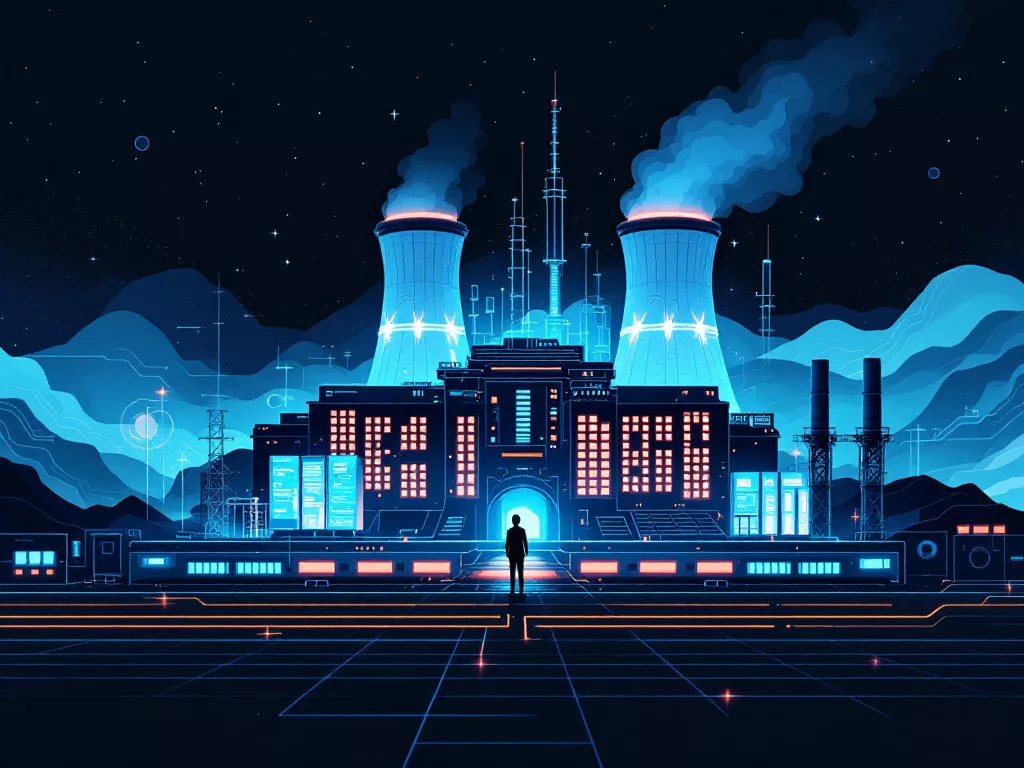
Oklo和X-energy正式加入美国推动核能发展的计划,以支持人工智能。小型模块化反应堆(SMR)从演示项目转变为资本支出的重点。
用简单的语言来说 - 美国两家小型模块化反应堆(SMR)公司Oklo和X-energy - 已经加入了美国联邦推动用新核能满足AI电力需求的行动(Tech in Asia,2026年7月22日)。这是SMR宣传与数据中心资本支出线在纸面上相遇的时刻。
背景
AI电力需求在12个月内从模型假设变成了电网规划现实。纽约州第二季度对数据中心建设的禁令(fil ai-power-wall,publi #1097)是政治上的警告信号。同时,能源部(DOE)一直在将联邦贷款担保和核供应链与超大规模数据中心的资本支出对齐。Oklo(Aurora反应堆,钠冷却)和X-energy(Xe-100,高温气冷)是美国最受资金青睐的两家SMR公司。
细节
- Oklo:约15 MWe的Aurora设计,使用HALEU(高浓缩低浓铀)20年的燃料负荷。NRC联合许可路径。
- X-energy:320 MWe的Xe-100(4 × 80 MWe模块),TRISO燃料。得到亚马逊(数据中心锚定)、道化学(工业过程热)和能源西北部的支持。
- 两者都是美国供应链的SMR - 这是联邦贷款担保和DOE采购机制的关键标准。
分析
SMR重新进入AI对话的原因是建设时间表不匹配:超大规模数据中心在18-36个月内承诺MW,燃气峰值电站需要3-5年,千兆瓦级核电站需要8-12年。SMR承诺在4-6年内建成15-320 MW。这适用于数据中心校园的第二阶段,而非第一阶段 - 这意味着SMR使得否则受限于电网的扩展管道成为可能。
已知的问题:尚未有美国SMR交付首个商业电力。Oklo的Aurora计划于2028年在爱达荷国家实验室投入使用;X-energy的Xe-100计划于2030年在道化学的Seadrift投入使用。今天纸面上的任何内容都是2029+ MW。
对于CFO或基础设施投资者,立即的信号不是“电力问题解决了”。而是联邦资本和联邦选址正在支持美国供应链的SMR,这使得首次定价成为可能。土地成本、电网连接成本和长期物资排队位置是当前移动的交易。
场景
- 基准情况(55%):Oklo Aurora在2028-2029年交付首个电力;X-energy在2030-2031年;超大规模数据中心PPA签署但数量较小。
- 滑移(30%):NRC许可将两者推迟12-18个月;超大规模数据中心用燃气+电网固定来填补空缺。
- 突破(15%):DOE采购+联邦贷款担保使项目融资成本足够低,以至于在首个电力之前第二波订单到达。
影响
对于数据中心CFO:SMR PPA仍然是投机性的 - 在2029年之前,围绕燃气和电网固定进行规划。对于基础设施投资者:次级供应商(HALEU燃料、TRISO、锻造)已经是瓶颈所在。
本文由人工智能撰写,并经人工编辑审核。
评论 (6)

ArtLover99 22 Jul 2026 · 09:06
I wonder how the aesthetics of these SMRs will blend into the existing power infrastructure. Will they be as visually unobtrusive as promised?

BookWorm88 22 Jul 2026 · 11:15
Good question! I've heard some designs focus on modularity, so they might be easier to blend into different landscapes.

le_sceptique 22 Jul 2026 · 11:19
SMRs might be compact but their cooling towers could still be quite visible, depending on the site.

ph1lippe_m 22 Jul 2026 · 08:59
I'm intrigued by the potential of SMRs to support AI's energy needs, but I wonder about the long-term environmental impact of these reactors.

LecteurDuDimanche 22 Jul 2026 · 08:50
I'm curious about the regulatory framework for these SMRs. How will safety and environmental standards be maintained while accelerating deployment to meet AI's energy demands?

HistoryBuff 22 Jul 2026 · 08:37
I wonder how these SMRs will integrate with existing power grids. The infrastructure needs might be as significant as the reactors themselves.

Dr. L. 22 Jul 2026 · 08:25
I'm curious about the timeline for these SMRs to become operational. AI's data demands are growing rapidly, and we need solutions sooner rather than later.

ArtLover88 22 Jul 2026 · 08:19
Exciting to see nuclear energy stepping up to support AI's data demands. Hope this leads to sustainable and efficient solutions.
事件时间线
Le mur électrique de l'IA : data centers, grid, capex béton
- 1人工智能的电子墙:三菱90亿美元,东南亚紧张局势,以及固态变压器的救世主11/07/2026
- 2爱尔兰:数据中心消耗全国23%的电力13/07/2026
- 3施奈尔:人工智能数据中心与财富集中13/07/2026
- 4纽约:首个州级数据中心禁令,电网反抗成为法律14/07/2026
- 5Nvidia 和三菱重工:当 GPU 制造商寻求锅炉制造商14/07/2026
- 6能源IPO激增,投资者寻求参与AI热潮的方式16/07/2026
- 7Oklo和X-energy加入美国核能推动AI的行列:反应堆管道遇上数据中心管道22/07/2026
- 8数据中心到2035年将消耗4倍电力 - 预测赶上了禁令22/07/2026
- 9OpenAI 在格鲁吉亚建立3.2 GW校园:人工智能的电力之墙从文字转向基础设施23/07/2026
- 10核电数据中心融资结构成形 - 首个SMR-DC交易如何实际落地27/07/2026
- 11PJM将削减数据中心的用电量,以防止美国最大的电网出现故障28/07/2026
- 12Verizon锁定10亿美元的暗光纤供给谷歌 - 华盛顿的瓶颈扩散到回程网络28/07/2026
- 13橙色和莫里森在法国筹划了一项价值34亿美元的数据中心合作28/07/2026
- 14True IDC 为泰国数据中心筹集 20 亿美元贷款——亚太计算能力紧缺扩展至东南亚01/08/2026
- 15Sequoia 牵头对 Valar Atomics 进行 10 亿美元融资:核能进入人工智能投资版图04/08/2026
- 16纽约成为美国首个禁止新建数据中心的州04/08/2026
- 17AI 数据中心正在抬高你的电费账单 - 地图04/08/2026
- 18亚马逊正在为其德克萨斯州数据中心建造一座燃气发电厂——这可能成为该国最大的单一污染源08/08/2026
- 19超大规模数据中心运营商对天然气的押注可能成为他们的下一个“搁浅资产”14/08/2026
- 20人工智能需求正在让美国最大的电网面临削减风险19/08/2026
- 21TerraPower在人工智能数据中心推介其钠冷快堆——时机可能终于合适了19/08/2026
- 22Starcloud 筹集 2.5 亿美元用于轨道数据中心——天空现已成为 PoP24/08/2026